
Global Sourcing & Engineering Guide: Technical Analysis of Rechargeable Lithium-Ion Bike Batteries
As the international micro-mobility and athletic cycling markets transition toward higher lumen densities, longer runtime expectations, and stringent sustainability standards, rechargeable lithium-ion bike batteries have emerged as the foundational component governing product reliability, safety, and brand value. Sourcing managers, OEM design directors, and wholesale bike distributors face complex technical considerations—ranging from electrochemical cell composition and Battery Management System (BMS) safeguards to global dangerous goods transport compliance (UN 38.3, IATA PI965) and circular economy directives such as EU Regulation 2023/1542.
This technical whitepaper outlines the structural parameters of enterprise-grade lithium-ion power packs, compares cell form factors, evaluates thermal management methodologies developed in Nordic sub-zero testing environments, and delivers actionable criteria for international buyers looking to secure robust supply chains for bicycle battery technologies.
Key Takeaway for B2B Procurement Officers
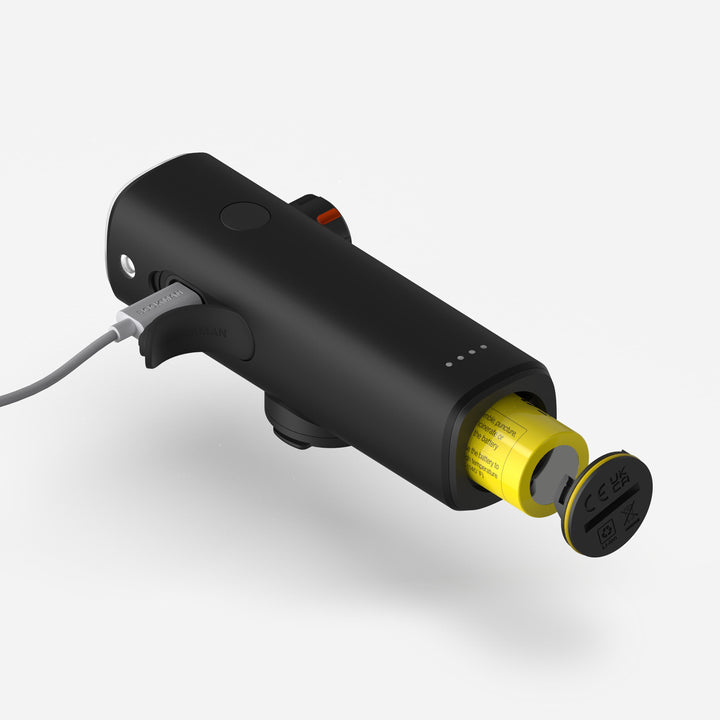
Modular, user-replaceable 21700 lithium-ion battery architectures reduce warranty return rates by over 60% compared to integrated non-replaceable designs, while extending overall luminaire operational lifespan beyond 5 years in demanding urban rental and endurance cycling applications.
1. Electrochemical Architecture: 21700 vs. 18650 Cell Form Factors
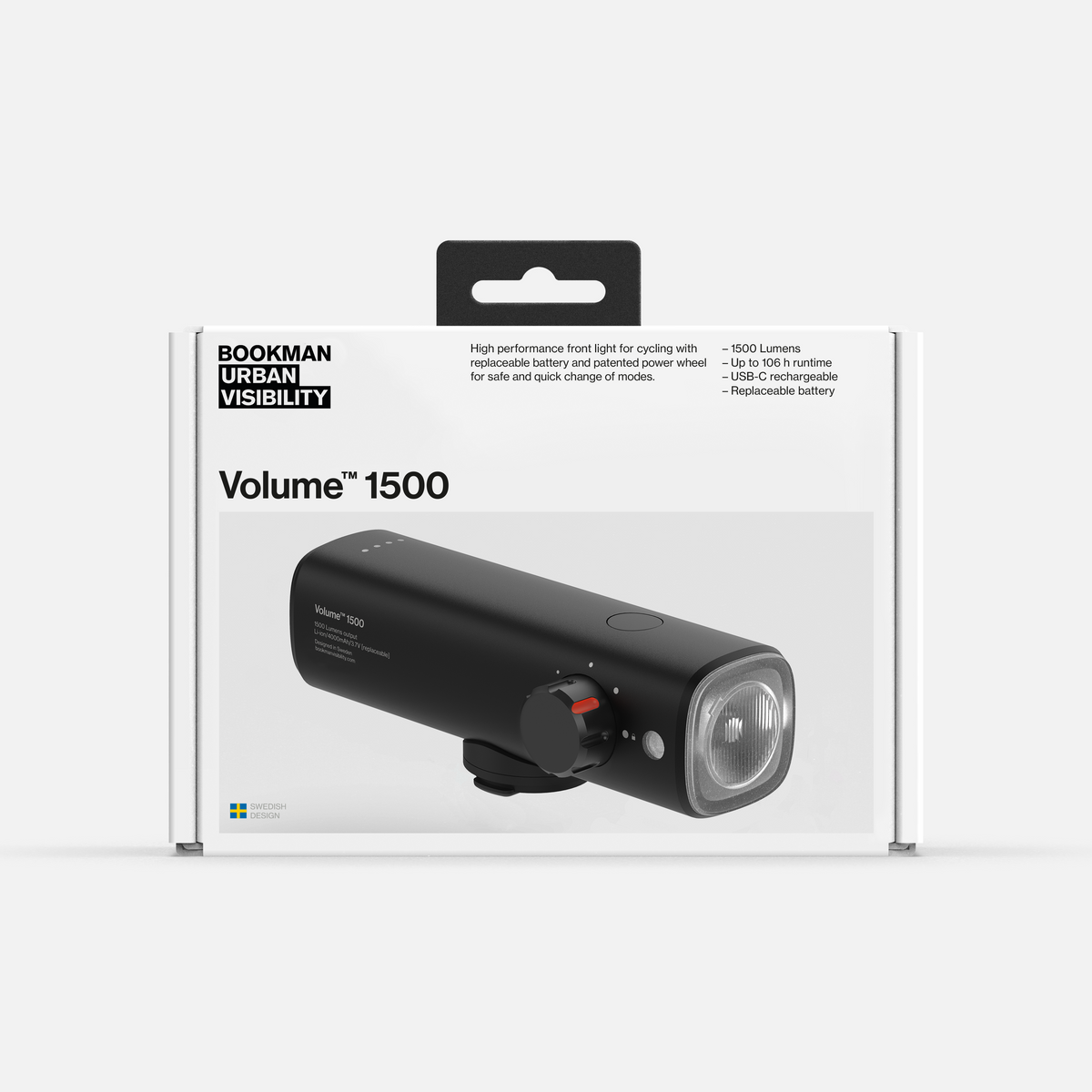
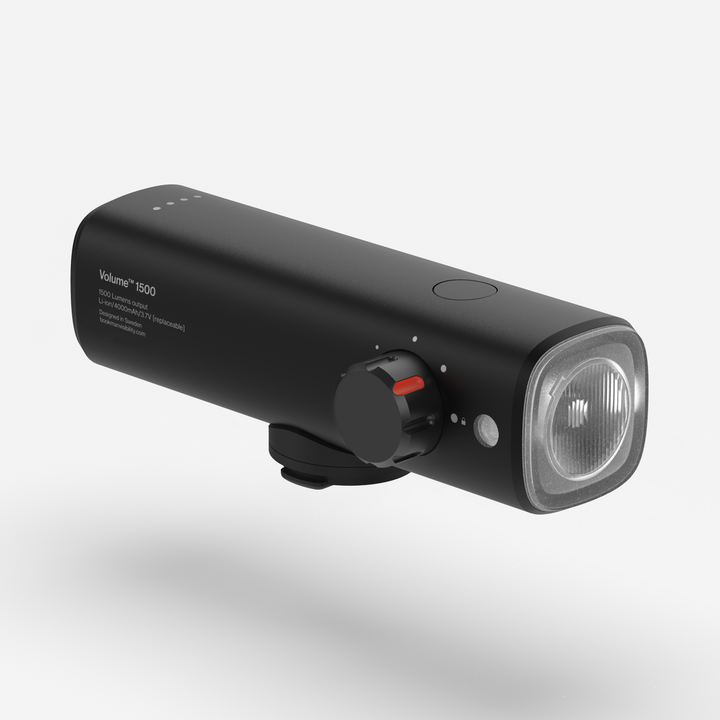
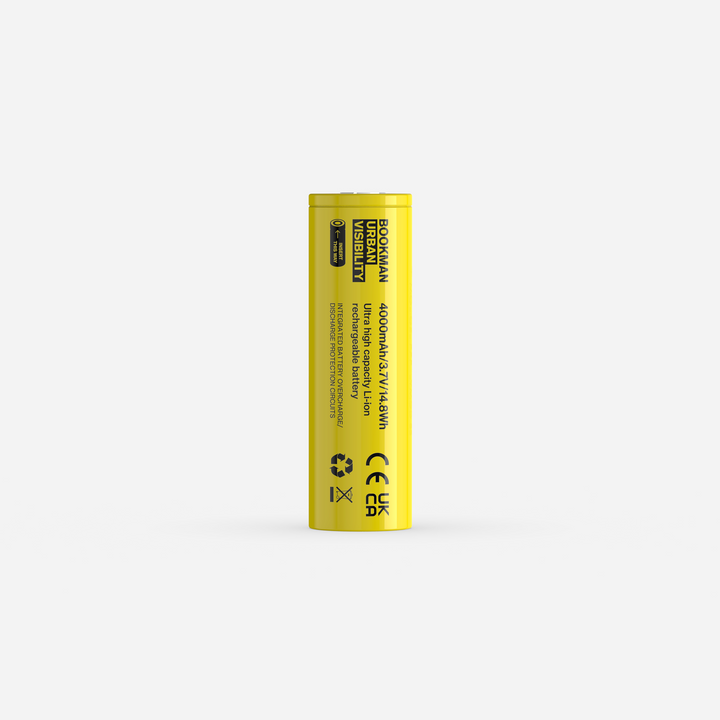
The transition from legacy 18650 cylindrical cells to advanced 21700 Lithium Nickel Manganese Cobalt Oxide (NMC) chemistry represents a paradigm shift in portable energy density for bicycle illumination and e-mobility accessories. A standard 21700 cell (21mm diameter, 70mm length) provides approximately 46% more volumetric energy capacity than an 18650 cell, allowing Bookman design engineers to pack up to 4000 mAh (14.8 Wh) into a compact, aerodynamic luminaire housing without adding significant parasitic mass.
Below is an empirical hardware matrix comparing the electrical, thermal, and lifecycle characteristics of modern rechargeable lithium-ion bike batteries across standard industrial deployment metrics:
Industrial Hardware Benchmark Matrix: Lithium-Ion Bike Battery Configurations
Empirical specification breakdown for procurement analysis, technical evaluation, and OEM customization.
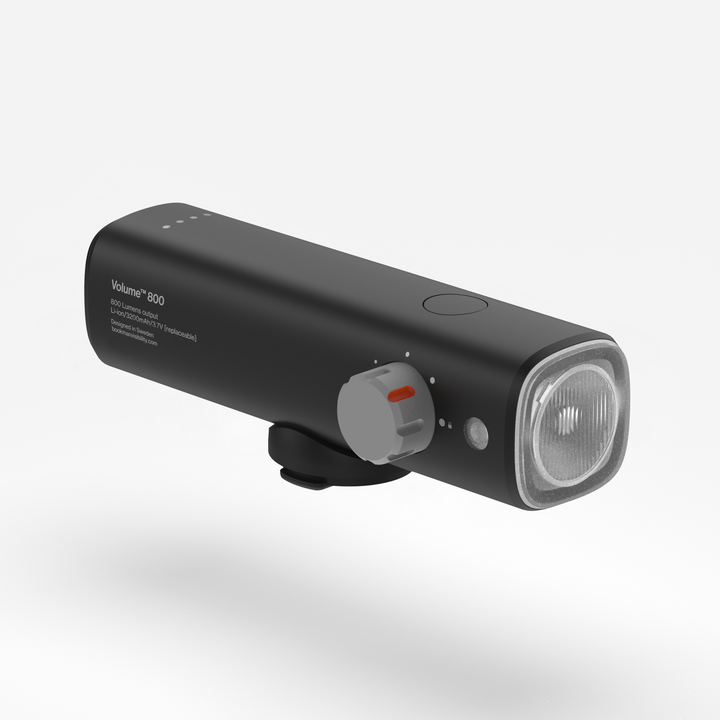
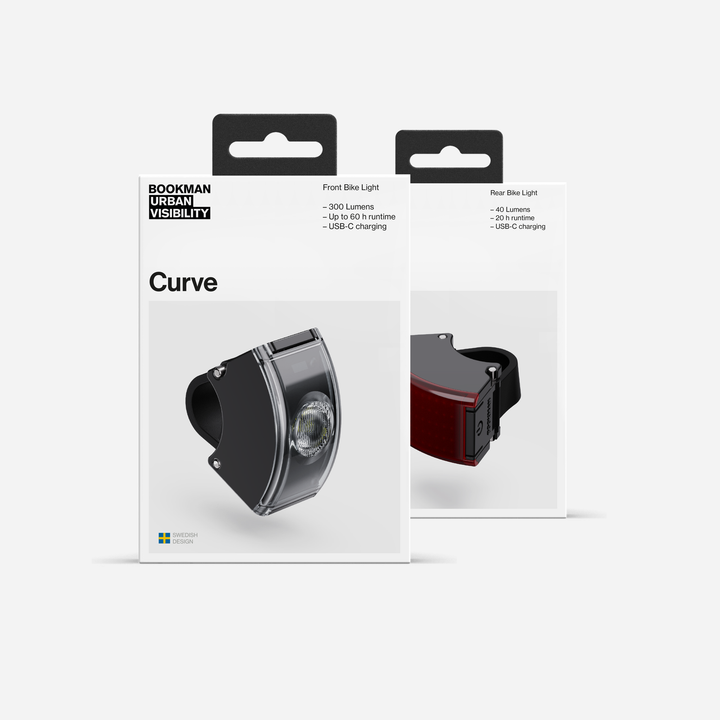
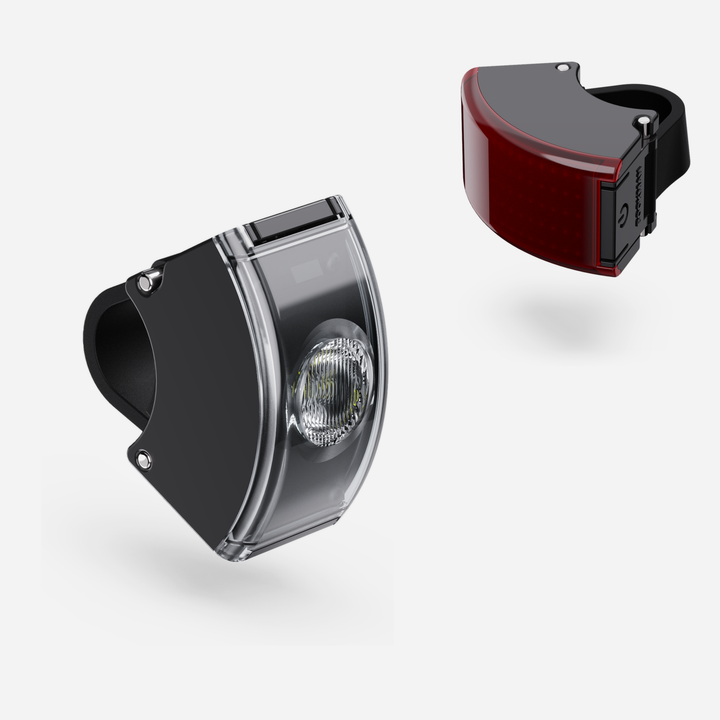
| Specification Parameter | Volume™ 1500 (21700 NMC) | Volume™ 800 (18650 NMC) | Curve Rear (Li-Po Sealed) | Industry Standard (Generic 18650) |
|---|---|---|---|---|
| Cell Chemistry & Format | Lithium NMC 21700 Cylindrical | Lithium NMC 18650 Cylindrical | Lithium-Ion Polymer (Li-Po) | Lithium Cobalt Oxide (LCO) 18650 |
| Nominal Voltage / Capacity | 3.7V DC / 4000 mAh (14.8 Wh) | 3.7V DC / 2600 mAh (9.62 Wh) | 3.7V DC / 650 mAh (2.4 Wh) | 3.6V DC / 2200 mAh (7.92 Wh) |
| Volumetric Energy Density | ~265 Wh/kg | ~210 Wh/kg | ~175 Wh/kg | ~160 Wh/kg |
| Continuous Discharge Rate (C-Rating) | 3.0C Continuous (12A peak) | 2.0C Continuous (5.2A peak) | 1.5C Continuous | 1.0C Continuous (Voltage sag prone) |
| Charge Cycle Lifespan | 800+ Cycles (>80% Capacity retention) | 600+ Cycles (>80% Capacity retention) | 500+ Cycles (>75% Capacity retention) | 300–400 Cycles |
| Operating Temperature Range | -20°C to +60°C (Nordic Certified) | -15°C to +55°C | -10°C to +50°C | 0°C to +40°C (High cold degradation) |
| Ingress Protection Rating | IPX5 Weatherproof Sealed Shell | IPX5 Weatherproof Sealed Shell | IPX4 Weather Sealed | IPX4 or Unrated |
| BMS Circuit Protection | Integrated Micro-BMS (OVP, UVP, OCP, SCP) | Integrated Micro-BMS (OVP, UVP, OCP, SCP) | PCB Overcharge Guard | Basic Fuse / Unprotected Cell |
| Transport Certification | UN 38.3, IEC 62133-2, CE, RoHS | UN 38.3, IEC 62133-2, CE, RoHS | UN 38.3, CE, RoHS | Varies / Often Incomplete |
2. Advanced Battery Management System (BMS) & Thermal Dissipation Dynamics
High-lumen bicycle headlights operating at 1500 lumens demand sustained current draw (exceeding 2.5 Amperes at high boost modes). Without rigorous electronic governance, high-current discharge induces internal heat accumulation, accelerating cathode breakdown, lithium plating, and premature cycle capacity drop. To counter thermal stress and guarantee user safety under harsh riding conditions, Bookman integrates a proprietary Smart Micro-BMS Architecture directly into the 21700 battery subsystem.
- Over-Voltage Protection (OVP): Cuts off incoming current precisely at 4.20V ± 0.05V to prevent electrolyte oxidation during rapid USB-C Power Delivery charging.
- Under-Voltage Protection (UVP): Prevents deep discharge damage by disconnecting the load when cell potential reaches 2.75V, safeguarding anode integrity.
- Over-Current (OCP) & Short-Circuit Protection (SCP): Instantaneous solid-state switch-off within <10 microseconds upon detection of short circuits or excessive current draws up to 12A.
- Thermal Runaway Mitigation: Dual NTC thermistors continuously monitor cell temperature. If housing temperatures exceed 65°C, the power management unit automatically scales back current draw to preserve junction safety without completely turning off lighting output.
Furthermore, Bookman’s Swedish design heritage emphasizes structural heat dissipation. The Volume™ 1500 features an extruded 6061-T6 aluminum heatsink frame that acts as a thermal bridge, drawing heat away from both the CREE/Luminus LED junction and the internal 21700 lithium-ion cell casing. This passive conduction design prevents heat-induced capacity fade during extended summer night rides.