Engineered for Melbourne’s rigorous civil construction, logistics corridors, and high-intensity commuter pathways. Compliant with AS/NZS 4602.1 and EN ISO 20471 standards.
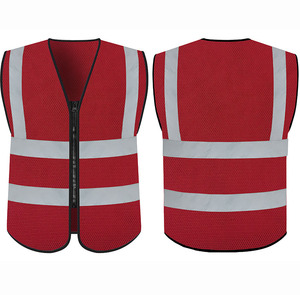
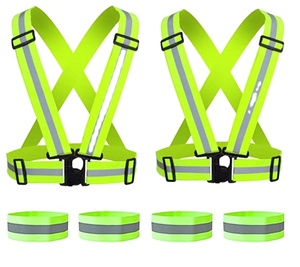
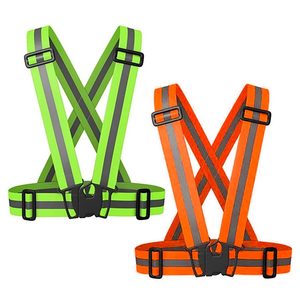
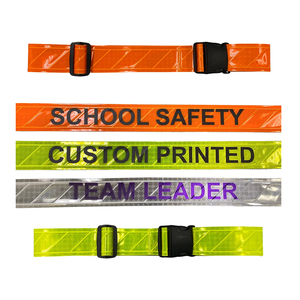

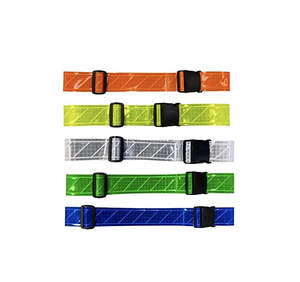
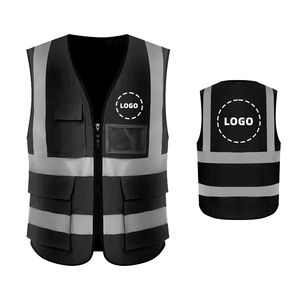
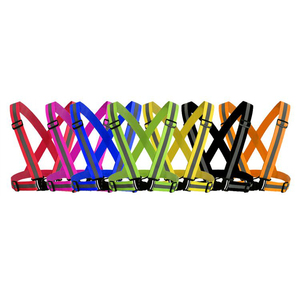
Sourcing reflective belts and personal visibility harness systems for the Australian market—specifically Victoria’s metropolitan and regional hubs—demands strict adherence to national safety codes. Unlike basic European or North American specifications, Australia’s environmental conditions impose rigorous thermal, UV, and photometric challenges on retroreflective materials.
Key standards governing retroreflective safety belts supplied into Melbourne include AS/NZS 4602.1:2011 (High-visibility safety garments for high-risk applications) and AS/NZS 1906.4:2010 (Retroreflective materials and devices for road traffic control purposes). Enterprise procurement officers must understand the mechanical and optical metrics required for Class N (Night use) and Class D/N (Day/Night use) classification.
Information Gain Insight: Under AS/NZS 1906.4, retroreflective tape must maintain a minimum coefficient of retroreflection ($R_A$) of at least $330 \text{ cd/lx}\cdot\text{m}^2$ at an entrance angle of $5^\circ$ and observation angle of $0.2^\circ$. Premier export manufacturers engineer micro-prismatic and silver glass-bead tapes achieving exceeding $450 - 500 \text{ cd/lx}\cdot\text{m}^2$ to guarantee visibility up to 300 meters under low-beam vehicle headlights along low-lit arterial routes like the Hume Freeway and Maroondah Highway.
When selecting a manufacturer to supply Melbourne distributors, evaluate the following material matrix to ensure zero clearance failures at Australian border customs and workplace safety audits:
| Material Tech | Retroreflectivity ($R_A$) | UV Stability (Melbourne Weather) | Wash Durability (ISO 6330) | Primary Industrial Application |
|---|---|---|---|---|
| Micro-Prismatic PVC Lattice | 500 - 600 cd/lx/m² | High (Sealed anti-yellowing layer) | 25 Wet Wipe / Cold Wash cycles | Civil Roadworks, Rainwear, Maritime Logistics |
| High-Elastic Polyester Tape | 380 - 450 cd/lx/m² | Moderate to High | 50 Machine Wash Cycles at 40°C | Urban Cycling, Night Running, Fleet Courier Wear |
| Glass-Bead Heat Transfer Film | 400 - 480 cd/lx/m² | High Thermal Tolerance | 30 Industrial Wash Cycles at 60°C | Over-Jacket Utility Harnesses, Rail Operations |
Melbourne’s urban topography presents unique operational contexts for high-visibility equipment. From intensive night shift civil engineering to year-round bike commuting in variable oceanic weather ("four seasons in one day"), reflective belts offer a versatile, non-restrictive alternative to heavy safety vests.
Vital for night-shift contractors working on the Level Crossing Removal Project, Metro Tunnel rail corridors, and West Gate Tunnel upgrades requiring compact Class N supplementary body marking over heavy flame-retardant outer layers.
Workforce visibility solutions across Swanson Dock, Appleton Dock, and the freight hubs of Laverton North and Dandenong. Waterproof PVC belts resist salt-mist, diesel grime, and oil abrasion while maintaining high retroreflective contrast.
Melbourne boasts Australia’s most extensive commuter cycle network, including the Capital City Trail and Merri Creek Path. Lightweight elastic reflective belts provide 360° visibility for twilight riders navigating dark lanes without added thermal bulk.
The Australian personal protective equipment (PPE) sector is undergoing a structural shift driven by corporate ESG commitments, technological hybridization, and ergonomic preferences. OEM/ODM suppliers serving Melbourne importers must adapt to these three dominant market trajectories:
Enterprise procurement teams across Victorian municipal councils and Tier-1 construction firms increasingly enforce green supply chain quotas. Modern reflective belt manufacturing utilizes 100% recycled polyethylene terephthalate (rPET) webbing spun from post-consumer plastic bottles, reducing embedded carbon footprint by up to 45% without degrading tensile strength or elasticity.
While retroreflective materials depend on external light sources (such as oncoming vehicle headlights), hybrid belts incorporating flexible surface-mounted COB LED strips or light-guide optical fibers provide active lumen emission. This active emission ensures vulnerable road users—such as last-mile gig-economy delivery riders along Swanston Street—remain visible even in complete shade or unlit parklands.
Traditional solid hi-vis vests trap body heat, causing thermal discomfort during Melbourne’s humid summer shifts or strenuous cycling. Elastic cross-belt harnesses (H-shape and X-shape configurations) deliver equivalent 360-degree reflective perimeter outline while allowing unrestricted airflow, reducing wearer fatigue, and accommodating all body sizes via multi-point adjustment buckles.
As an established global manufacturer supplying leading Australian safety brands, our production facilities combine automated sewing engineering, precision hot-melt seam sealing, and rigorous optical testing.
Our manufacturing plants operate under full BSCI ethical social standards and ISO9001 quality management systems, ensuring seamless corporate compliance for major Australian retail chains and government contract tenders.
We provide comprehensive OEM customization—including custom dye-sublimated webbing colors (Pantone matching), heat-transfer reflective logos, custom barcode tagging, and eco-friendly retail packaging ready for store shelves.
Direct shipping routes from our primary export terminals to the Port of Melbourne ensure reliable 12-to-16 day transit times, backed by consolidated container freight (LCL/FCL) and complete documentation support (CO, Form E, Test Reports).
Answers to common regulatory, logistical, and technical queries from Australian safety apparel buyers and commercial importers.
Request factory-direct wholesale pricing, certified compliance test reports, and custom OEM sample kits tailored for Melbourne and broader Australian safety markets.
Contact Us
