

Whitepaper: Industrial Safety Reflector Manufacturing & Supply Chain Dynamics for the Chilean Market
In the global market for occupational protection equipment and personal mobility safety hardware, Chile represents one of the most rigorous regulatory environments in Latin America. Driven by tight legal mandates for road co-existence (Ley de Convivencia Vial N° 21.088), massive copper mining safety compliance requirements across the Antofagasta and Tarapacá regions, and rapidly expanding urban bicycle and e-bike infrastructure in Santiago, Concepción, and Valparaíso, the demand for certified, high-performance safety reflectors and active illumination gear has reached unprecedented heights.
As a leading safety reflector factory and specialized exporter to South America, our manufacturing ecosystem integrates advanced polymer chemistry, precision optical tooling, photometric lab testing, and custom OEM packaging designed specifically to handle the unique environmental and legal conditions of the Chilean market.
Information Gain Insight: Unlike standard retroreflective tape or basic injection-molded plastics, micro-prismatic reflectors optimized for high-altitude UV exposure retain up to 92% of their coefficient of retroreflection ($R_A$) after 36 months in Chile's Atacama region, compared to a 48% optical loss in non-UV-stabilized glass-bead alternatives.
1. Photometric Science: Glass-Bead vs. Micro-Prismatic Retroreflection Tech
Understanding the physics of optical retroreflection is critical for safety product importers, B2B purchasing managers, and Chilean municipal contractors. When headlights illuminate an object, specular reflection scatters light away at equal angles, rendering the person or bicycle invisible to the driver. Retroreflective technology redirects light backward along its original path straight toward the driver’s eyes.
Our manufacturing plant specializes in two distinct retroreflective technical paradigms:
A. Micro-Glass Bead Technology (Enclosed & Encapsulated)
Microscopic high-index glass beads embedded in a flexible polymer resin matrix act as spherical lenses. A metallic vacuum-coated reflective backing behind each bead focuses and returns light. While cost-effective and flexible for wearable armbands or soft clothing trims, glass-bead systems typically achieve retroreflective coefficients ($R_A$) ranging between 80 cd/lx/m² and 250 cd/lx/m².
B. Corner-Cube Micro-Prismatic Optics (Rigid & High-Intensity)
Constructed using high-clarity Poly(methyl methacrylate) (PMMA) or hard Polycarbonate (PC), micro-prismatic reflectors utilize full internal reflection (FIR) through microscopic three-sided pyramids molded into the rear face. Light strikes each interior pyramid wall three times before returning straight to the illumination source.
- Luminous Efficiency: Reaches $R_A$ values exceeding 500 to 1,000 cd/lx/m² at observation angles of 0.2°.
- Long-Distance Detection: Increases night-time driver detection distances from 100 meters (glass bead) to over 350 meters (micro-prismatic corner-cube).
- Structural Rigidity: Ultrasonic welding seals air cavities behind the prisms, preventing water ingress, mud build-up, and chemical degradation.
Technical Performance Matrix: Optical & Environmental Specifications
| Reflector Technology | Material Base | Retroreflective $R_A$ (cd/lx/m²) | Chile UV Resistance (Years) | Primary Chilean Application |
|---|---|---|---|---|
| Micro-Prismatic Hard PMMA | Optical Grade Acrylic | 500 - 1200 cd/lx/m² | 5+ Years (Extreme) | Bike Frames, Spoke Clips, Traffic Barricades, Mining Helmets |
| Micro-Prismatic Flexible PVC | High-Flex Vinyl Resin | 350 - 700 cd/lx/m² | 3 - 4 Years | High-Visibility Safety Vests, Snap Wraps, School Bags |
| Encapsulated Glass Bead | PET / Polyester Film | 150 - 300 cd/lx/m² | 2 - 3 Years | Pedestrian Slap Bands, Garment Piping, Temporary Signage |
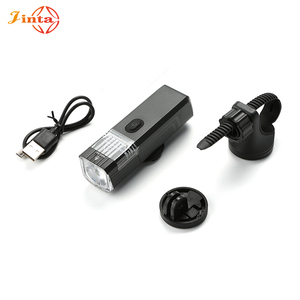
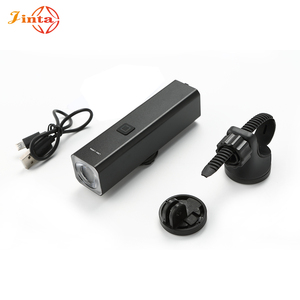
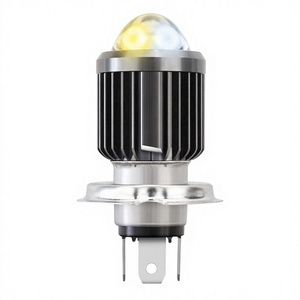
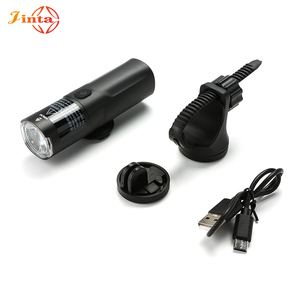
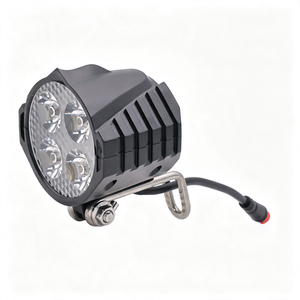
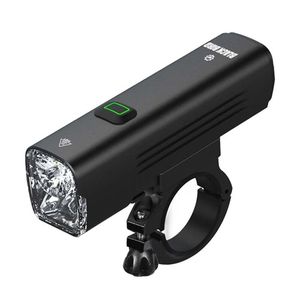
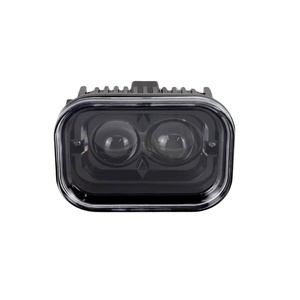
| Hybrid Active-Passive LED | Aluminium Alloy + PMMA | Active Lumens + 400 $R_A$ | 4+ Years | Urban E-Bike Headlamps, Motorcycle Spotlights, Mining Vehicles |
2. Chilean Market Analysis: Regional Demands & Regulatory Drivers
Chile's geographic diversity creates three major localized market drivers for safety reflectors and visibility products. Importers must tailor their product sourcing to match these regional operational environments:
1. Northern Chile (Antofagasta, Calama, Atacama Mining Corridor)
Chile is the world's largest producer of copper. Mining facilities operates under strict safety protocols enforced by SERNAGEOMIN (Servicio Nacional de Geología y Minería). Vehicles, machinery, and personnel operating in high-altitude desert zones (such as Chuquicamata or Escondida) require high-contrast yellow and red retroreflective signs, heavy-duty truck spotlights, and ultra-durable helmet reflectors.
- Key Environmental Requirement: High UV protection (UV Index frequently hits 13-15). Materials must utilize UV stabilizer additives (HALS - Hindered Amine Light Stabilizers) to prevent polymer yellowing and brittleness.
- Dust & Sand Abrasion: Lens coatings must resist scratch degradation from fine particulate quartz dust.
2. Central Chile (Greater Santiago Metropolitan Area & Valparaíso)
With over 7 million inhabitants, Santiago has experienced an explosive increase in micro-mobility (bicycles, electric scooters, lightweight motorbikes). The enactment of Ley 21.088 (Ley de Convivencia Vial) legally requires all cyclists to utilize active front lights (white), rear lights (red), and mandatory wheel/pedal retroreflectors capable of 360-degree visibility.
- B2B Wholesale Opportunities: Mass supply to Chilean retail chains (Sodimac, Easy, Falabella), local bicycle assembly plants, and specialized online importers.
- Design Aesthetic: Scandinavian-style urban minimalism, compact form factors, USB-C rechargeable integration, and sleek quick-release brackets.
3. Southern Chile (Concepción, Puerto Montt, Patagonia Forestry & Shipping)
The southern regions experience heavy rainfall, dense fog, and short daytime sunlight hours in winter. Maritime logging transport, salmon farming operations, and coastal shipping require high-waterproof safety gear.
- Waterproofing Standard: IPX6 to IPX8 sonic sealing for electronic LED safety beacons and high-tack adhesive backings for reflective vehicle tapes that withstand heavy humidity and pressure washing.
3. Chilean Regulatory Compliance & Quality Assurance Standards
Exporting to Chile requires strict alignment with national and international quality frameworks. Custom officials at the ports of Valparaíso, San Antonio, and Iquique (ZOFRI) inspect incoming shipments for compliance with safety declarations.
Ley de Convivencia Vial (N° 21.088)
Mandates visible passive retroreflective devices on human-powered and light electric vehicles. Wheel spokes must feature white/amber reflectors, while pedals and frame stays require rear red reflective markers readable from a minimum distance of 150 meters under low-beam vehicle lighting.
Chilean Standard NCh2184 / NCh1411
Defines colorimetric and photometric thresholds for personal safety apparel and retroreflective equipment utilized in industrial sites and public infrastructure work zones.
Global Certification Standards
Our export facilities hold certification for CE, EN ISO 20471 Class 2/3 (High-Visibility Apparel), EN 13356 (Visibility Accessories for Non-Professional Use), and ANSI/ISEA 107, ensuring fast customs clearance across Chilean borders.
4. Factory Precision Manufacturing: Modern Tooling & Quality Control
Our dedicated manufacturing facility operates advanced production lines engineered to deliver consistent quality across high-volume production runs. We combine automated optical molding with rigorous environmental stress testing:
A. Ultra-Precision Electroform Tooling
The core of micro-prismatic reflector manufacturing lies in the nickel electroform molds. Our optical engineers utilize diamond-turning CNC technology to create micro-cube corners with surface tolerances below 0.05 microns. This optical fidelity ensures that light rays are reflected back with maximum efficiency rather than dispersed randomly.
B. Automated Dual-Inject Polymers & Ultrasonic Sealing
Reflectors exposed to harsh weather can fail if moisture penetrates the optical micro-cavities behind the prisms. Our automated assembly lines employ high-frequency ultrasonic welding machines that bond PMMA or PC lens caps to tough ABS backings, creating an airtight, hermetically sealed air gap vital for internal light reflection.
C. Integrated Photometric Testing Laboratory
Every batch produced for export undergoes automated goniophotometer testing to measure the retroreflective coefficient ($R_A$) at varying entrance ($\beta$) and observation ($\alpha$) angles. We test under the following parameters:
- Observation Angle ($\alpha$): Standard 0.2° (simulating long-distance automobile driver perspective) and 0.5° (medium-distance).
- Entrance Angle ($\beta$): Measured from -4° to +30° to guarantee side-angle reflectivity when vehicles approach from cross-streets.
- Thermal Cycling Chamber: Environmental endurance testing from -20°C to +80°C to verify seal integrity under extreme Andean high-altitude conditions.
5. Complete B2B Export Solutions & Logistics for Chilean Importers
Navigating international supply chains requires a manufacturing partner capable of managing complete OEM/ODM customized manufacturing, ocean freight logistics, and Chilean import documentation.
A. Custom Branding & Private Label Packaging (OEM/ODM)
We provide comprehensive private-labeling for Chilean distributors, supermarket brands, and hardware importers:
- Custom retail blister packaging with full Spanish-language compliance text, barcoding (EAN-13), and Chilean importer registration tags.
- Direct logo printing on reflector bodies, lens rims, and silicone mounting straps via high-durability UV pad printing or laser engraving.
- Custom color matching (Pantone) for reflector housings and high-visibility fabric trims.
B. Streamlined Freight Logistics to Main Chilean Ports
Our export shipping team coordinates full container loads (FCL) and less-than-container loads (LCL) directly to major Chilean maritime hubs:
- Port of San Antonio & Port of Valparaíso: Primary gateway for Central Chile, Santiago wholesale centers, and retail distribution hubs. Typical transit time from our factory: 28 to 35 days via direct South American Pacific shipping routes.
- Port of Iquique (ZOFRI Duty-Free Zone): Ideal for re-export distributors serving Northern Chile, Bolivia, and Peru.
- Documentation Support: Provision of Commercial Invoice, Packing List, Bill of Lading (B/L), Certificate of Origin (Form F / Free Trade Agreement benefits where applicable), and CE/RoHS/EN test reports for seamless customs entry.