High-lumen, intrinsically safe, and ruggedized LED lighting systems certified for heavy industrial applications across North Africa and Middle East territories.
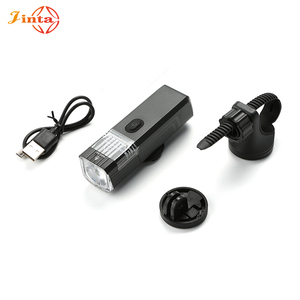
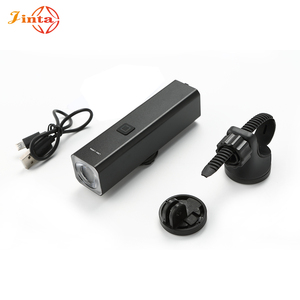
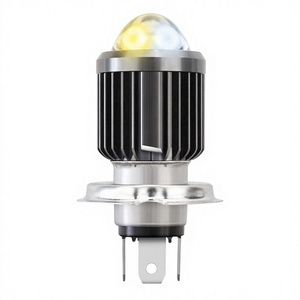
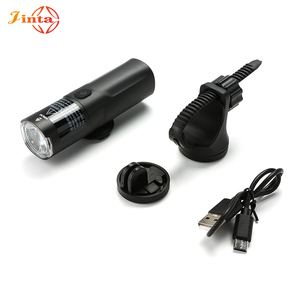
Egypt has solidified its status as North Africa’s premier industrial and logistics hub. Fueled by massive state-led investments in the Suez Canal Economic Zone (SCZONE), expanded offshore natural gas exploration at the Zohr Gas Field, and mega-infrastructure projects such as the New Administrative Capital (NAC), the demand for high-reliability, certified portable safety lighting has surged exponentially.
Industrial facilities operating in Egypt face a dual challenge: stringent compliance requirements governed by international health, safety, and environment (HSE) protocols, combined with hostile operational microclimates. Dust storms (Khamaseen), extreme ambient summer heat exceeding 48°C, high humidity along the Mediterranean and Red Sea coasts, and corrosive saline environments demand safety flashlights that go beyond standard consumer specifications.
Information Gain Insight for Procurement Managers: Sourcing safety flashlights for the Egyptian market requires evaluating certified surface temperature codes (T-Class ratings) alongside ingress protection. Due to Egypt's elevated ambient temperatures, a flashlight rated T4 in Europe may exceed safe surface thresholds under Egyptian summer sun unless equipped with advanced thermal dissipation housing.
Global original equipment manufacturers (OEMs), international factories, and specialized exporters play a crucial role in providing Egyptian industrial enterprises with certified explosion-proof torches, headlamps, and work lights. Understanding local market compliance, distribution channels, and technical specifications is vital for foreign exporters seeking to supply Egyptian B2B procurement networks.
Safety flashlights deployed across Egyptian industrial sites must withstand severe physical and electrical stress. Unlike standard flashlights, intrinsically safe torches are engineered to prevent electrical sparks or thermal dissipation from igniting volatile gases, vapors, or combustible dust clouds.
Limits electrical energy within circuitry so that sparks cannot generate enough energy to ignite surrounding explosive gas atmospheres (Group IIA, IIB, IIC).
Complete sealing against fine silica sand particles prevalent in Western Desert operations and total protection against water immersion under high marine pressure.
Enclosures fabricated from static-dissipative polycarbonates or hard-anodized aircraft-grade aluminum resistant to sulfuric acid, hydraulic fluids, and crude oil residue.
| Zone Classification | Hazard Level | Typical Egyptian Operating Site | Required Flashlight Rating |
|---|---|---|---|
| Zone 0 / Zone 20 | Continuous explosive atmosphere present | Fuel storage tank interiors, Damietta LNG vapor spaces | ATEX / IECEx Zone 0 (Ex ia IIC T4 Ga) |
| Zone 1 / Zone 21 | Likely to occur in normal operations | Alexandria refinery processing units, Western Desert rig floors | ATEX / IECEx Zone 1 (Ex ib IIC T4 Gb) |
| Zone 2 / Zone 22 | Unlikely; short duration if present | SCZONE warehouse aisles, Suez Port chemical storage perimeter | ATEX / IECEx Zone 2 (Ex ic IIC T4 Gc) |
| Industrial Heavy-Duty | Non-explosive, extreme physical impact | New Administrative Capital tunneling, Eastern Desert gold mines | IP68 Waterproof, Drop-rated (2m+), High Lumens |
Procurement demand for safety portable lighting in Egypt is segmented across four core economic drivers. Each sector introduces unique field conditions requiring specific optical designs, beam profiles, and mounting accessories.
Egypt is a major natural gas exporter. Flashlights deployed by state entities like EGPC (Egyptian General Petroleum Corporation) and international operators (Eni, BP, Shell) require strict ATEX Zone 0 and 1 certifications. Field technicians require right-angle torches with heavy-duty pocket clips and magnetic tailcaps for hands-free maintenance within tight pipeline galleries and refinery manifolds.
Mining operations in Sukari Gold Mine and phosphate extraction zones along the Red Sea demand high-lumen headlamps with prolonged lithium-ion runtimes (up to 12 hours). Dust penetration is the primary cause of equipment failure; flashlights equipped with double O-ring silicone gaskets and impact-resistant polycarbonate lenses are mandated by safety officers.
The Suez Canal sees over 20,000 vessel transits annually. Bunkering services, hull inspections, and container terminal maintenance require marine-certified flashlights (SOLAS compliant) that resist saltwater corrosion and fogding. Dual-beam capabilities—offering a wide floodlight for deck walk-throughs and a focused spot beam for long-range signaling—are preferred.
Projects like the Cairo Metro expansion, high-speed rail lines, and new urban developments rely heavily on robust hands-free headlamps and wide-voltage vehicle auxiliary work lights. Equipment reliability directly impacts project timelines during overnight shifts under extreme ambient dust.
Exporting safety flashlights to Egypt requires compliance with local trade regulations and customs modernization frameworks. Foreign factories must navigate key import protocols:
Manufacturer registration under Decree 43/2016 with the General Organization for Export and Import Control (GOEIC) ensures seamless clearance at Egyptian ports.
All B2B shipments must be registered on the Nafeza single-window trade portal, generating an Advanced Cargo Information Declaration (ACID) code prior to departure.
Compliance with Egyptian Standards (EOS) aligned with IEC 60079 international electrical standards guarantees market acceptance by safety inspectors.
As a leading international designer and exporter of industrial safety flashlights, our manufacturing infrastructure is engineered to deliver reliable, high-performance illumination tailored for demanding overseas markets like Egypt.
Precision CNC machining of thermal aluminum heat sinks coupled with high-impact injection molding guarantees long-term durability in high-vibration settings.
Every batch undergoes thermal endurance tests at 55°C, IPX8 hydrostatic water immersion, drop-impact testing from 2 meters, and optical integrating sphere calibration.
Full support for private labeling, custom beam optics, localized Arabic-English user documentation, and customized packaging compliant with Egyptian retail & industrial standards.

