Providing Costa Rican importers, distributors, and fleet assemblers with institutional-grade LED headlights optimized for tropical humidity, cloud forest fog, and rugged Central American terrain.
Under Costa Rica's Plan Nacional de Descarbonización (2018-2050), the nation leads Central America in transitioning toward zero-emission transportation. Urban hubs across the Greater Metropolitan Area (GAM)—including San José, Heredia, Alajuela, and Cartago—have experienced exponential growth in electric bicycles, e-motorcycles, and lightweight commercial fleets. However, local operators face harsh environmental challenges: annual precipitation exceeding 4,000 mm in tropical rainforest zones, high-altitude fog along the Inter-American Highway (Cerro de la Muerte), and unpaved ballast roads across Guanacaste and the Nicoya Peninsula. Our factory-direct LED headlights engineered with hermetic IP68 seals, anti-fogging pressure equilibrium valves, and dual-color optical lenses directly solve these geographic vulnerabilities for local importers.
Select from our flagship B2B inventory certified for deployment across Costa Rican bicycle, e-bike, and motorcycle networks.
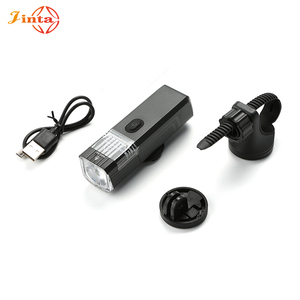
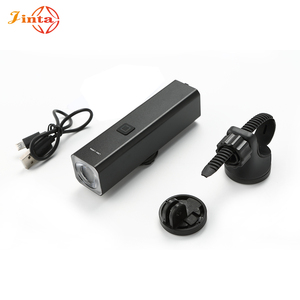
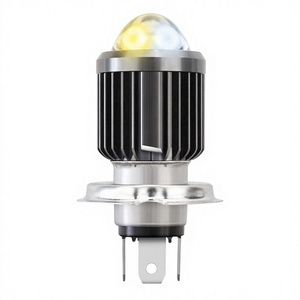
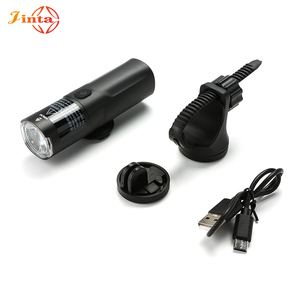
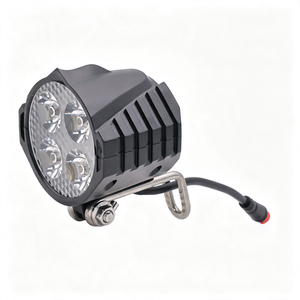
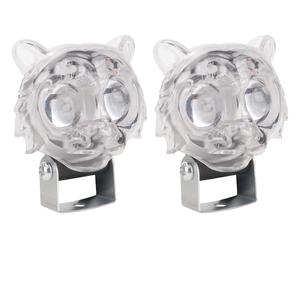
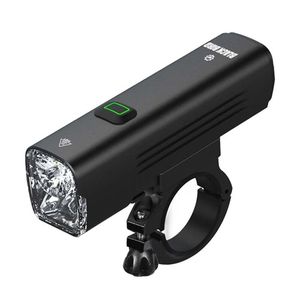
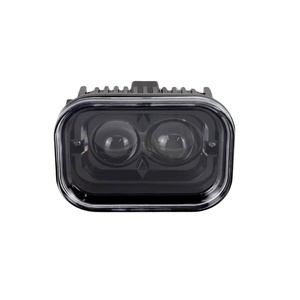
Engineering optical clarity, heat dissipation, and broad voltage stability for tropical Central American distribution.
In high-altitude transit corridors such as the Braulio Carrillo route or Monteverde cloud forests, 6000K cool white light suffers severe Rayleigh scattering against dense fog and moisture droplets. Our dual-color fisheye headlights feature an instant switchable 3000K Amber low beam. Amber light wavelengths (580-590nm) minimize back-scatter glow, giving riders crisp contrast and road surface visibility through torrential downpours.
Costa Rica's ambient relative humidity regularly hits 90-98%. Standard lighting enclosures trap moist air, causing internal condensation when the LED die warms up. Our manufacturing process incorporates GORE-style hydro-phobic breather membranes paired with die-cast ADC12 aluminum thermal sinks. Moisture escapes thermally while external liquid water remains completely barred, maintaining optical clarity season after season.
Commercial delivery e-bikes and imported electric scooters operating across San José often experience rapid battery voltage fluctuations under load. Our integrated driver electronics employ solid-state buck-boost step-down regulators rated up to 60V surge limits. This prevents circuit burnout during regenerative braking or full-throttle ascents on steep volcanic slopes.
| Product Series | Operating Voltage | Optical Lens Type | Lumen Efficiency | Ingress Rating | Primary Localized Application |
|---|---|---|---|---|---|
| Jinta Compact Series | 5V USB-C / Internal Li-ion | TIR Anti-Glare Reflector | 130 Lm/W | IP67 Waterproof | Urban Bicycle Commuting (San José, Heredia) |
| Dual-Color Fisheye Projector | 12V – 80V DC Wide Range | High-Index Convex Quartz | 145 Lm/W | IP68 Hermetic Seal | Cloud Forest & Mountain Fog Routes (Monteverde) |
| Reliago E-Bike Series | 12V – 48V Direct Connect | Asymmetric Cut-Off Optics | 135 Lm/W | IP67 Weatherproof | E-Bike Fleets & Delivery Scooters (Hitway BK5 Fit) |
| 7-Inch Sealed Sealed Beam | 12V DC Vehicle Standard | Multi-Surface Reflector Lens | 150 Lm/W | IP68 Dust & Salt Proof | Heavy Dual-Sport Motorcycles & Off-Road ATVs |
| 4-Inch 30W Auxiliary Pod | 9V – 36V DC Work Light | Spot / Flood Combo Optics | 140 Lm/W | IP68 Submersible | Coastal Off-Roading & Agriculture (Guanacaste) |
Tailored lighting configurations matching the geographic reality of Costa Rica's seven provinces.
Navigating congested urban corridors like Avenida Segunda or Paseo Colón requires beam shaping that prevents dazzling oncoming motorists while clearly illuminating sudden potholes and rain-slicked pavement markers. Our headlights feature European StVZO-compliant horizontal cut-off beams that project maximum light onto the tarmac while cutting high-angle glare.
In Pacific and Caribbean beach municipalities (Jacó, Tamarindo, Puerto Viejo, Puntarenas), airborne salt spray quickly corrodes inferior light housings and mounts. Our products feature 6063 aviation-grade aluminum housings treated with 48-hour salt-spray resistant anodization, non-corrosive stainless hardware, and UV-stabilized polycarbonate lenses that won't yellow under intense tropical sunlight.
Empowering Costa Rican importers with scalable supply chain solutions and custom engineering flexibility.
Inspired by advanced Scandinavian safety interfaces, our lights offer intuitive gloved-hand control—allowing riders to shift brightness instantly without cycling through cumbersome mode loops during rapid elevation drops.
Addressing Latin America's growing e-waste focus, our premium headlights feature swappable 21700 / 18650 lithium cells. Distributors can supply replacement batteries, extending total product lifespan to 5+ years.
Every export unit adheres to CE, RoHS, FCC, and DOT safety guidelines, expediting seamless customs clearance at Costa Rican ports of entry (Puerto Caldera & Puerto Limón).
Essential guidance on importing LED headlights into Costa Rica.
Our LED headlights are typically classified under HS Code 8512.20 (Electrical lighting or visual signaling equipment for bicycles and motor vehicles). This standard classification ensures consistent tariff treatment under Costa Rican Customs (Servicio Nacional de Aduanas).
Every batch undergoes IP67/IP68 pressure testing, utilizing sonic-welded seams, silicone O-ring gaskets, and waterproof Type-C ports rated for continuous immersion in 1 meter of water for 30 minutes.
Yes. As a direct OEM manufacturer, we offer full laser-etched logo customization on the aluminum body, custom color box designs in Spanish, and localized user manuals for retail chains across Central America.
Our direct-wire e-bike series (such as the Reliago and 4-inch auxiliary series) features an integrated step-down driver accepting 12V, 24V, 36V, and 48V DC inputs directly from the primary battery pack.
Production lead time is typically 15–25 days depending on OEM complexity. Transit time via ocean shipping to Puerto Caldera (Pacific side) or Puerto Limón (Atlantic side) averages 20–30 days.
Yellow light (3000K) has longer wavelengths that penetrate mist, rain, and cloud cover without blinding reflection, providing significantly better safety along mountain passes during tropical storms.

