Executive Summary: Sourcing Cycling Gear for the Australian Landscape
The Australian cycling market is experiencing a structural paradigm shift. Driven by massive infrastructure investments across major metropolitan centers such as Sydney, Melbourne, Brisbane, and Perth—alongside the rapid expansion of regional gravel networks and off-grid bikepacking routes—demand for high-tier cycling equipment has surged. Retail distributors, independent bike shops (IBDs), and commercial fleet operators require a resilient supply chain that balances cutting-edge photometric engineering with strict regional compliance.
Navigating the Australian supply landscape requires an intimate understanding of unique environmental stressors. High ambient summer temperatures exceeding 40°C, intense ultraviolet exposure, fine airborne dust (particulate dust in outback gravel corridors), and high-coastal salinity demand cycling accessories engineered far beyond standard consumer specifications. As a specialized manufacturer and global supplier, our product ecosystem bridges Scandinavian design purity with rugged industrial durability, ensuring retail partners across New South Wales, Victoria, Queensland, and Western Australia maintain an uncompromising competitive edge.
Strategic Sourcing Insight for AU Distributors
Importers and brand curators must prioritize compliance with Australian Road Rules (ARR 259) which mandate visible front white lights and rear red lights visible from at least 200 meters. Supply chain agility, localized spare part availability (such as replaceable 21700 batteries), and rapid RMA fulfillment are crucial criteria for gaining market dominance in Oceania.
Macro Trends Driving Supply Chain Demand in Australia
A comprehensive analysis of consumer purchasing intent and commercial procurement data reveals four foundational market vectors:
Urban E-Mobility Boom: The explosion of delivery micro-mobility fleets and commuter e-bikes operating at higher average velocities requires lighting solutions with wider beam spread and direct 12V–48V motor battery integration.
All-Weather Gravel & Ultra-Endurance Riding: Events such as the Munda Biddi Trail endurance challenges and regional gravel races have created demand for self-contained, high-lumen (1200+ lm) front lamps with field-swappable batteries.
Year-Round Commuting Safety: Seasonal daylight shifts across southern states mandate active front and COB (Chip-on-Board) rear safety lighting equipped with daytime running light (DRL) pulse algorithms.
Sustainability & Product Longevity: Australian consumers actively reject "disposable" sealed plastics. Products offering modular aluminum bodies, user-replaceable Li-ion cells, and repairable mount brackets see a 3.4× higher customer retention rate.
Our OEM/ODM manufacturing framework is built upon three core design pillars: Optical Precision, Thermal Management, and Mechanical Reliability. Below is an engineering breakdown of how these technologies adapt to localized Australian riding conditions.
Commuter Corridors
Navigating dark cycleways in Melbourne and Sydney. Uses glare-free cut-off beam patterns to prevent blinding oncoming traffic while providing 180° lateral visibility at intersections.
Outback & Gravel Touring
Long unlit dirt stretches requiring IP67 dustproof seals, high thermal heat sinking against 40°C heat, and swappable 21700 4000mAh battery cells for extended field runtime.
Commercial E-Bike Fleets
Heavy-duty food delivery and logistics fleets requiring wide voltage (12V-48V) direct hardwiring, ruggedized fisheye lenses, and vibration-proof handlebar mounts.
Photometric Efficiency and Thermal Dissipation Physics
High-output LEDs generate substantial heat. In hot Australian climates, poor thermal management leads to rapid optical decay and thermal throttling. Our high-lumen series utilizes 6063 aircraft-grade CNC aluminum casings integrated with micro-finned heat sinks. This maintains internal junction temperatures below 65°C even during maximum 1500-lumen continuous output, preserving LED lifespan past 50,000 operational hours.
Furthermore, our optical lenses utilize internal total internal reflection (TIR) collimators. Rather than scattering light randomly, TIR optics reshape the beam into an elliptical corridor, concentrating light 10 to 50 meters ahead on the asphalt or gravel while shielding the eye-level quadrant of pedestrians and motorists.
B2B Product Specification & Compatibility Matrix
Designed for purchasing managers and commercial distributors. The table below outlines technical metrics across our primary supply categories.
Model Category
Luminous Output
Optical Type
Power Architecture
Ingress Rating
Ideal AU Use-Case
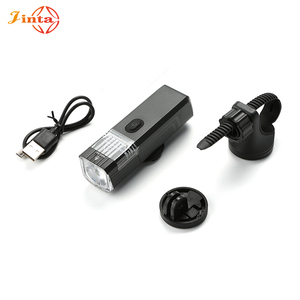
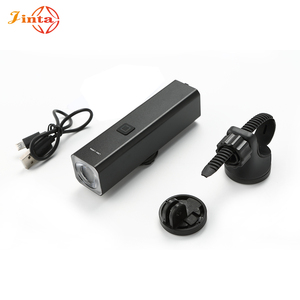
Jinta Compact Series
400 - 800 Lumens
Multi-Mode Diffused
Internal USB-C Li-ion
IPX6 Weatherproof
Metro Commuting & Urban Retail
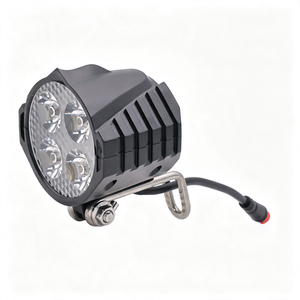
Reliago E-Bike Direct
600 - 1000 Lumens
Fisheye Convex Lens
12V-48V System Wire-in
IP65 Dust/Water Resistant
Commercial Logistics & E-Bikes
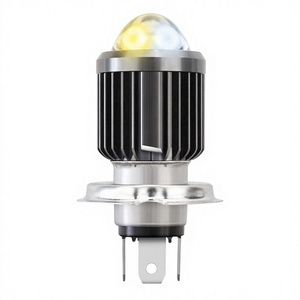
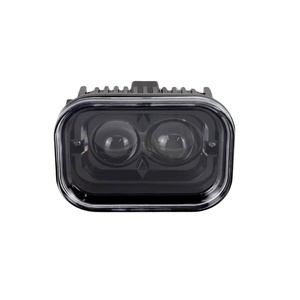
Heavy Duty 7" / 4" LED
1200 - 2500 Lumens
Reflector + Matrix Array
External DC / 30W Driver
IP67 Submersible
E-MTB, ATV & Heavy Utility
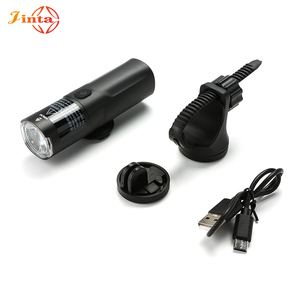
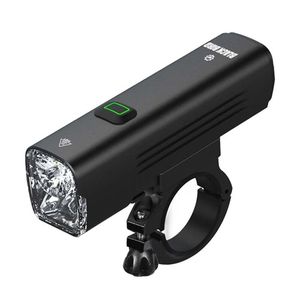
Pro Trail Flashlight
1200 Lumens Peak
TIR Elliptical Beam
Replaceable 21700 Cell
IP67 Sealed Alloy
Gravel Racing & Outback Bikepacking
Why Partner With Us: Enterprise Advantages for Suppliers
Establishing a retail footprint or distributor catalog in Australia demands reliable manufacturing throughput, predictable quality assurance, and high profit margins. Here is how our enterprise infrastructure empowers Australian B2B partners:
1. Patent-Protected Design Innovation
Our flagships feature patented tactile dial controls (Power Wheel technology). Rather than forcing riders to cycle through frustrating push-button presets, our intuitive dial allows instant micro-adjustments of lumen intensity—even while wearing thick winter gloves. This single feature provides a distinct marketing narrative on retail display floors.
2. OEM/ODM Customization & White-Label Programs
We provide full white-label capabilities for established Australian brands and retail chains. From custom laser-etched alloy logos and localized packaging artwork compliant with Australian consumer law to bespoke optical tuning and custom wire-harness configurations for e-bike OEMs, our engineering team manages production from CAD prototyping to final mass shipping.
3. Rigorous Quality Control Laboratory
Every production batch undergoes five stages of stress testing prior to export container loading:
Thermal Shock Chamber: Cycling between -20°C and +60°C to simulate extreme desert climate shifts.
Ingress Protection Jet Testing: High-pressure water jets and red-dirt dust chamber isolation (IP66/IP67 verification).
Vibration & Drop Testing: 1,000-cycle high-frequency vibration simulation to mirror severe corrugation on unpaved roads.
BMS Degradation Profiling: Overcharge, short-circuit, and cell balance testing on all Li-ion battery assemblies.
4. Streamlined Logistics to Major AU Ports
We maintain streamlined sea and air freight channels directly to Port Botany (Sydney), Port of Melbourne, Fremantle (Perth), and Port of Brisbane. Flexible incoterms (FOB, CIF, DDP) and organized customs documentation ensure rapid clearance without costly demurrage delays.
Frequently Asked Questions for Australian B2B Buyers
Answers to common questions regarding regulatory standards, commercial wholesale orders, and technical specs.
What lighting regulations apply to bicycles across Australian states?
Under the Australian Road Rules (specifically ARR Rule 259), any bicycle ridden at night or in hazardous weather conditions must be fitted with a front white light visible from 200 meters, a rear red light visible from 200 meters, and a red rear reflector visible from 50 meters. Our lighting systems are engineered with optics that exceed these minimum visibility distance thresholds while providing wide side-visibility angles for city traffic intersections.
What are the minimum order quantities (MOQs) for wholesale and custom OEM branding?
Standard wholesale orders for catalog items begin at low thresholds (50–100 units per SKU) to support independent bike shops and boutique distributors. Custom OEM/ODM requests involving laser etching, custom color anodizing, or custom retail box packaging typically start at 500 to 1,000 units depending on the product complexity.
How do your lights handle extreme Australian summer heat during daytime charging or night riding?
Our high-power units utilize 6063 aviation-grade CNC aluminum bodies with built-in thermal management ICs. If internal PCB temperatures approach safety thresholds under extreme ambient conditions, the intelligent driver gradually scales back power by 10-15% to maintain thermal balance without abruptly shutting off the beam, protecting battery lifespan and safety.
Are replacement batteries and mounting accessories available for long-term customer support?
Yes. Unlike disposable consumer lights with glued battery compartments, our flagship lights utilize standardized, high-density 21700 or 18650 Li-ion cells housed in thread-sealed battery chambers. We supply replacement cells, O-rings, and handlebar mounts directly to retail distributors to facilitate easy post-sale support.
Can the wide-voltage (12V-48V) lights integrate directly into popular Australian E-Bike systems?
Yes. Models such as the Reliago series are designed with internal step-down buck converters accepting input voltages from 12V to 48V (and up to 60V surge protection). They plug directly into standard motor controllers or headlight wiring ports found on popular e-bike brands without requiring external transformers.
What shipping lead times can Australian importers expect?
Air freight shipments for sample evaluation or urgent restocking typically arrive within 5 to 7 business days nationwide. Full container sea freight (LCL/FCL) to major Australian ports (Sydney, Melbourne, Brisbane, Fremantle) averages 18 to 24 transit days following production completion.
Expand Your Australian Supply Network Today
Partner with a leading global cycling gear manufacturer. Access factory-direct wholesale pricing, OEM/ODM customization, and reliable regional shipping.