Explore our factory-direct B2B OEM export collection engineered for urban cycling, e-mobility, automotive work setups, and high-lumen outdoor applications.
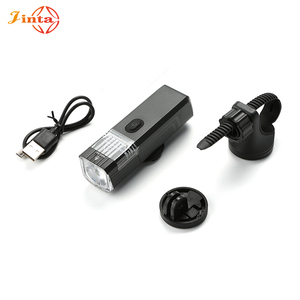
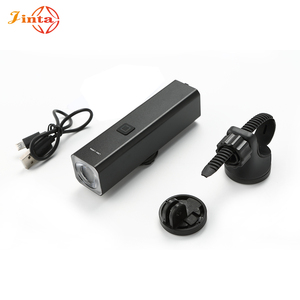
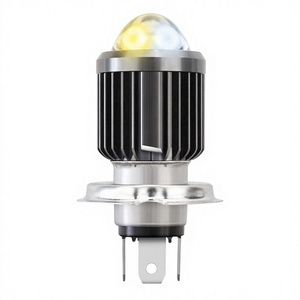
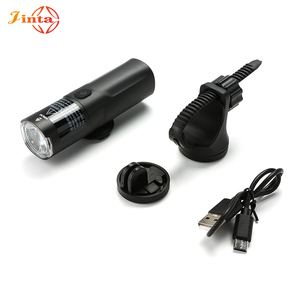
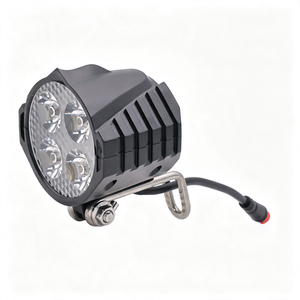
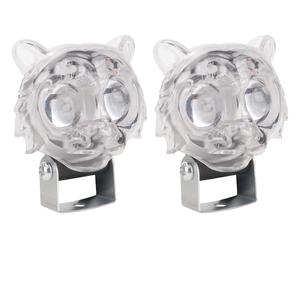
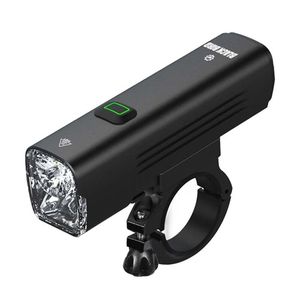
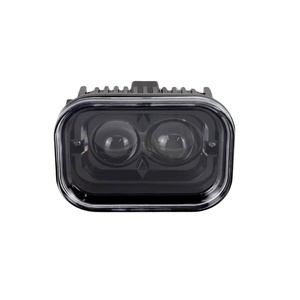
In the rapidly evolving landscape of solid-state illumination, Chip-on-Board (COB) technology has emerged as the definitive standard for high-density, uniform lighting solutions across micro-mobility, automotive, and industrial applications. B2B buyers, OEM product managers, and international importers must look beyond raw lumen counts to evaluate suppliers based on structural thermal dynamics, optical glass formulation, driver efficiency, and compliance engineering.
Our manufacturing matrix synthesizes Scandinavian ergonomic design philosophy—celebrated through prestigious honors such as the Eurobike Award, German Design Award, European Product Design Award (EPDA), and iF Design Award—with precision East Asian volume manufacturing. This hybrid model bridges the gap between sophisticated human-centric design and scalable, cost-efficient mass production.
High-power COB arrays generate extreme thermal flux density. Our modules integrate Metal Core Printed Circuit Boards (MCPCB) utilizing direct-copper-bonded aluminum substrates with thermal conductivities reaching 4.0 W/m·K. This keeps junction temperatures ($T_j$) strictly below $85^\circ\text{C}$, mitigating light decay and guaranteeing a 50,000-hour L70 operating lifespan.
Eliminating multi-shadow artifacts is crucial for user safety. By employing high-transmittance optical PMMA lenses, fisheye convex glass, and custom reflector cups, our COB assemblies deliver seamless beam profiles. Sharp anti-glare cut-off lines satisfy strict European road traffic regulations (such as StVZO standards) without sacrificing lateral flood illumination.
Every luminaire undergoes dual-chamber vacuum IP67/IP68 water ingress testing, 10G vibration endurance simulation, and thermal shock testing (-40°C to +85°C). Sealed anodized 6063 aluminum alloy housings protect sensitive driver ICs from humidity, road salt spray, and physical impacts.
To empower purchasing departments in selecting optimal lighting engines, the table below delineates the engineering parameters of traditional Surface Mounted Device (SMD) arrays versus our Next-Gen Integrated COB Modules.
| Evaluation Parameter | Legacy SMD LED Array | High-Density Integrated COB | Commercial B2B Impact |
|---|---|---|---|
| Luminous Uniformity | Multiple discrete point sources; visible glare & pixellation. | Continuous wide-surface emit surface; zero hot-spots. | Superior visual comfort & compliance with urban glare standards. |
| Thermal Resistance ($R_{th}$) | High thermal resistance ($8 - 12^\circ\text{C/W}$) per joint. | Ultra-low direct bonding ($1.2 - 2.5^\circ\text{C/W}$). | Reduces heatsink footprint by 35%, lowering overall housing weight. |
| Driver & Modularity | Complex trace routing; multiple failure points. | Streamlined single-chip circuit; integrated IC control. | Drops failure rates below 0.05% across bulk export shipments. |
| Driver Interface | Fixed voltage single-mode buck converter. | Wide-voltage input (12V-48V buck-boost / USB Type-C PD). | Universal compatibility across standard bikes, e-bikes & electric scooters. |
As global micro-mobility adoption accelerates and municipal safety regulations tighten worldwide, the architecture of portable and vehicle-mounted lighting is undergoing radical engineering shifts. Suppliers who master the synthesis of optical efficiency, battery serviceability, and mechanical ergonomics will define the next decade of commercial market share.
Traditional COB modules rely on wire-bonding to connect LED dies to the substrate, creating potential failure points during heavy vibrational stress. The industry is rapidly transitioning to Flip-Chip COB design. By directly mounting wire-free flip-chips onto the ceramic or copper matrix, manufacturers achieve higher package density, superior heat dissipation directly through the chip bottom, and increased lumen output per square millimeter by up to 25%.
Traditional push-button interfaces present significant friction when operated by cyclists or industrial workers wearing thick thermal gloves. Pioneered by top Swedish engineering brands, the integration of patented mechanical rotary dial switches—such as the Power Wheel system—allows seamless, step-free brightness adjustments with a single physical turn. This user-centric interaction eliminates complex button sequences and permits instant dimming to prevent dazzling oncoming traffic.
With the global surge in light electric vehicles (LEVs), standardized lighting assemblies must support multi-voltage inputs without requiring external step-down transformers. Modern COB lighting modules incorporate wide-range internal step-down drivers (12V to 48V / 72V DC). This universal integration allows seamless OEM installation across diverse e-bike, e-scooter, and motorcycle electrical architectures.
Planned obsolescence in sealed-battery lights poses severe environmental challenges and drives up long-term warranty costs for brand owners. Future-proof designs feature user-replaceable, high-capacity lithium-ion cells (such as standard 21700 or 18650 packs with 4000mAh capacities). Users and fleet maintenance teams can swap depleted batteries in seconds during long-distance rides, while brand owners can extend product service life indefinitely by offering spare battery packs.
Global lighting buyers, brand owners, and wholesale distributors face dynamic market conditions marked by heightened sustainability demands, regulatory compliance shifts, and supply chain volatility. To maintain a competitive advantage, professional procurement teams are reshaping their vendor selection criteria based on key strategic imperatives:
Essential technical, commercial, and logistical guidance for international importers and OEM brand managers.
Scale your product catalog with high-lumen bike lights, e-bike lighting systems, and urban visibility solutions. Connect directly with our engineering and export team today.

