Explore top-tier high-visibility safety hardware, reflective harnesses, and integrated LED illumination systems produced by leading certified China manufacturing hubs.
In today's global safety equipment and high-visibility apparel industry, selecting the right partner among China reflective strap factories is a critical strategic decision for procurement directors, product managers, and OEM brand owners. Driven by stringent global regulatory updates—such as ISO 20471, ANSI/ISEA 107-2020, and EN 17353—the performance expectations for passive retroreflective tapes, elastic safety harnesses, and active LED hybrid visibility straps have escalated dramatically. Modern reflective straps are no longer treated as simple passive trimmings; they are engineered optical safety components required to deliver maximum luminous intensity across extreme weather conditions, repeated wash cycles, and high-tensile physical strain.
China’s manufacturing ecosystem for reflective materials—centered primarily in Zhejiang, Jiangsu, and Guangdong provinces—controls over 75% of global retroreflective material output. However, technical capabilities vary significantly across manufacturers. Tier-1 factories have transitioned from basic glass-bead coating techniques to advanced micro-prismatic optical structures, automated ultrasonic welding, and environmental TPU/PVC lamination lines. This whitepaper provides procurement executives with a comprehensive roadmap for evaluating factory standards, understanding optical technology transitions, assessing quality control protocols, and capitalizing on upcoming sourcing trends.
High-tier Chinese factories utilize synthetic resin micro-prisms that reflect up to 80% more ambient light back to the source compared to traditional glass beads, exceeding 500 cd/(lx·m²) retroreflective coefficients under wet conditions.
The market is rapidly shifting toward active-passive hybrid straps. Combining flexible surface-mounted COB/SMD LEDs with retroreflective webbing ensures 360° visibility even in pitch-black environments without external light sources.
Leading factories employ high-frequency ultrasonic bonding and programmable CNC pattern stitching to guarantee joint strength exceeding 350 N, preventing seam failure during extreme athletic or industrial usage.
To maintain a competitive edge, procurement teams must understand the core physics of retroreflection. Unlike diffuse reflection (which scatters light in all directions) or specular reflection (which bounces light at an equal opposite angle, like a mirror), retroreflection redirects light back toward its original source—such as an approaching vehicle's headlights. Achieving this requires precision micro-engineering:
In glass-bead retroreflective webbing, spherical glass beads with a high refractive index ($n \ge 1.90$) are embedded into a durable polymer matrix backing. Half of each bead is coated with a metallic aluminum vacuum layer. When light enters the front face of the bead, it is refracted, focused onto the rear metallic surface, and bounced directly back through the bead toward the driver. Premier Chinese factories utilize proprietary top-coat sealants that protect these microscopic beads from abrasion, UV breakdown, and industrial laundering processes.
For extreme conditions—such as marine safety, high-end cycling gear, and tactical vests—micro-prismatic vinyl technology dominates. Thousands of microscopic cube-corner prisms are precision-molded into a transparent polymer film. Light undergoes total internal reflection across the three interior faces of each prism before exiting back parallel to the incoming beam. Top China manufacturers utilize flexible, cold-resistant TPU bases capable of maintaining elasticity down to -40°C without cracking.
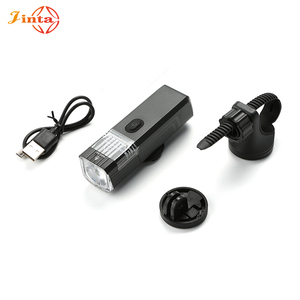
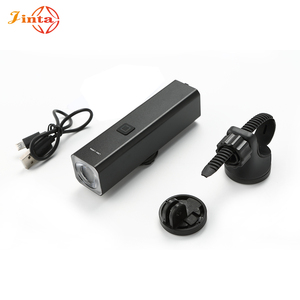
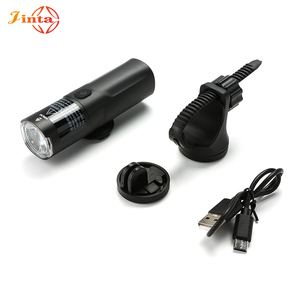
Integrating active electronic components (battery packs, flexible PCB strips, and high-efficiency COB/SMD LEDs) into passive reflective webbing is the newest technological frontier. By pairing high-lumen, rechargeable illumination units (such as USB Type-C integrated drive boards) with passive reflective straps, safety gear provides dual-defense visibility. Even if the battery exhausts after long usage, the passive retroreflective webbing guarantees baseline safety compliance under vehicle headlights.
Evaluating key specifications across different reflective strap material classes allows procurement teams to match technical requirements with product application targets.
| Strap Material Type | Retroreflective Coeff. ($R_A$) | Wash Durability | Weatherability Range | Primary Application Segment |
|---|---|---|---|---|
| High-Elasticity Glass-Bead Webbing | 330 - 420 cd/(lx·m²) | 25 - 50 Cycles @ 60°C | -20°C to +70°C | Running Belts, Pet Safety, Athletic Wear |
| Micro-Prismatic TPU Reflective Band | 500 - 700 cd/(lx·m²) | 50+ ISO Industrial Washes | -40°C to +80°C | Professional Safety Vests, Marine, Tactical |
| Flame-Retardant Aramid Reflective Strap | 450 - 500 cd/(lx·m²) | 50+ Dry Cleaning Cycles | Up to 350°C Flash Thermal | Firefighter Turnout Gear, Mining Safety |
| Active LED + Reflective Hybrid Harness | Active: 100+ Lumens Passive: 380 cd/(lx·m²) |
Spot Clean / Waterproof Electronics | -10°C to +60°C | Night Cycling, E-Bike Commuting, Roadwork |
Sourcing reflective products from China is moving far beyond basic unit-cost negotiations. Forward-thinking global brands are prioritizing supply chain resilience, environmental accountability, and advanced customized functionality.
Global brands are mandating Global Recycled Standard (GRS) verified PET backing yarns and solvent-free PU retroreflective coatings to minimize environmental footprints while maintaining compliance with EU REACH and RoHS regulations.
Modern China factories have integrated high-speed laser cutting workstations capable of creating complex custom reflective patterns, logo cutouts, and specialized anatomical strap shapes without expensive tooling dies.
Leading manufacturers now feature internal testing labs equipped with retroreflection photometers, tensile testing rigs, environmental temperature chambers, and automated wash testing units to guarantee batch-to-batch consistency.
When auditing potential manufacturing suppliers in China, enterprise buyers must conduct a rigorous multi-tiered evaluation. Relying solely on online trading profiles can lead to sourcing risks, inconsistent retroreflection ratings, or production delays.
Ensure the factory holds updated, third-party verified test reports (such as from SGS, TÜV Rheinland, or SATRA). Essential standards include:
Inspect the factory's raw material storage and polymer mixing facilities. High-grade reflective tape relies on consistent adhesive chemistry (acrylic or polyurethane-based) to prevent delamination when exposed to moisture or extreme friction. Ask the engineering team how they maintain uniform glass-bead distribution density during hot-melt lamination.
Top factories should operate automated ribbon weaving looms, multi-color silk-screen printing machines, high-speed slitters, and automatic packing systems. Evaluate their daily production output, typical sample lead times (ideally 3 to 5 working days), and mass production lead times (typically 15 to 25 days).
Address critical purchasing, engineering, and logistical queries regarding custom reflective strap manufacturing in China.
Ready to elevate your product line with certified optical safety technology, active LED integration, or high-tensile reflective webbing? Connect directly with our engineering team for instant technical consultation, pricing quotes, and sample requests.
Get a Quote