

1. Industrial Overview: Why China Leads Global Bicycle Illumination Manufacturing
The global bicycle illumination sector has undergone a massive technological shift. Bicycle lights have evolved from simple incandescent safety markers into highly complex optical instruments featuring chip-on-board (COB) LED arrays, intelligent acceleration sensors, StVZO-compliant anti-glare lenses, and high-density 21700 lithium-ion energy cells. At the epicenter of this industrial evolution is China’s specialized manufacturing ecosystem, centered primarily in Zhejiang and Guangdong provinces.
Top Chinese bicycle lamp manufacturers provide unparalleled competitive advantages to international OEM/ODM brand owners, importers, and retail distributors. By integrating complete supply chain verticals—from precision CNC aluminum die-casting and high-speed automated Surface Mount Technology (SMT) PCB assembly to optical lens molding and photometric integrating sphere testing—Chinese suppliers deliver cutting-edge technology with high scalability and cost efficiency.
2. Key OEM/ODM Manufacturing Capabilities & Enterprise Advantages
Partnering with top-tier Chinese bike lamp manufacturers allows international brands to leverage advanced engineering infrastructures that significantly reduce time-to-market while ensuring strict compliance with European and North American safety standards.
Advanced Optical Engineering
In-house optical design teams utilizing TIR (Total Internal Reflection) lenses and Fresnel optics to achieve StVZO German standard cut-off beams that prevent dazzling oncoming traffic while maximizing ground projection.
Smart PCB & Sensor Firmware
Proprietary 3-axis accelerometer and gyroscope integration for ultra-precise brake light activation, ambient light sensing for auto-on/off, and dynamic thermal throttling algorithms to protect LED lifespan.
Precision CNC & Thermal Dissipation
6063 Aircraft-grade aluminum CNC machining combined with anodic oxidation surface finishing guarantees IP66/IPX6 water ingress protection and rapid heat evacuation for high-lumen outputs (800lm to 8000lm sets).
Architectural Matrix: Bike Lamp Product Categories & Sourcing Specifications
To assist global procurement officers in structuring their product lines, the following matrix outlines technical benchmarks across key categories:
| Category | Primary LED Architecture | Optical Lens Type | Battery Chemistry / Capacity | Ingress Rating | Target Distribution Segment |
|---|---|---|---|---|---|
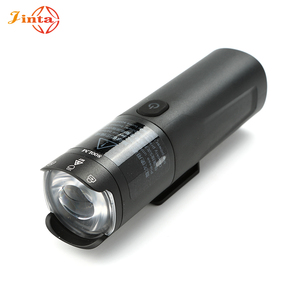
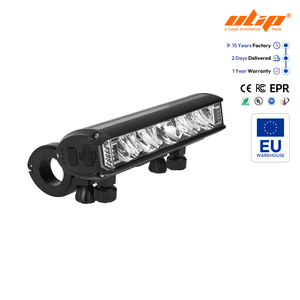
| High-Lumen Front Headlights | CREE / Luminus High-Power SMD | Dual-Zone Spot & Flood TIR Lens | 21700 Li-ion (4000mAh - 8000mAh) | IP66 Waterproof | MTB, Ultra-Endurance & Unlit Trail Riding |
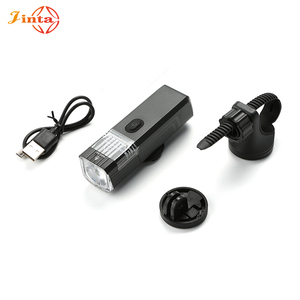
| Urban Commuter Headlamps | Osram / Samsung Mid-Power LED | StVZO Cut-off Anti-Glare Lens | 18650 Li-ion / USB-C Direct | IPX5 Waterproof | City Commuting, E-Bikes, Road Bicycles |
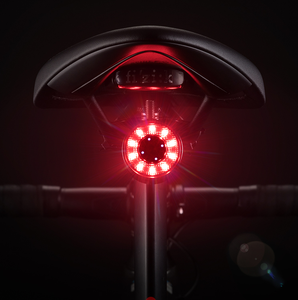
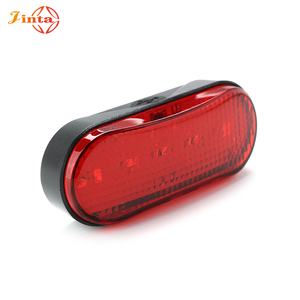
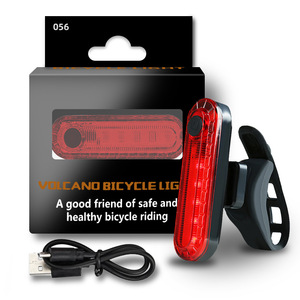
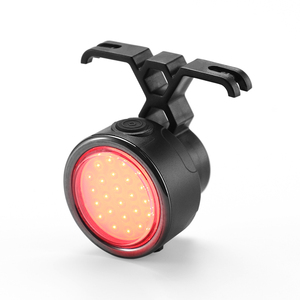
| Smart Brake Sensing Rear Lights | High-Density COB (Chip-on-Board) Array | Diffused Wide-Angle Fresnel Lens | 350mAh - 500mAh Polymer Li-ion | IP65 Waterproof | Urban Safety Warning, Group Riding Sets |
| Wearable & Clip-On Safety Lights | RGB / Multi-Color Micro COB | 360° Omnidirectional Diffuser | Ultralight Rechargeable Li-Po | IPX4 Weatherproof | Pedestrian, Kids, Backpack & Armband Gear |
3. Future Sourcing & Technological Trends in Bicycle Illumination (2025–2030)
As urban mobility transitions heavily toward e-mobility and high-performance gravel/road cycling, the expectations placed on bicycle lighting systems are evolving rapidly. B2B buyers must align their supply chain strategies with these major market shifts:
Trend A: Direct E-Bike Battery Integration (CAN-bus Compatibility)
With global E-bike adoption surging, manufacturers are moving beyond standalone rechargeable batteries. Sourcing demands are leaning heavily toward system-integrated lights capable of operating across broad voltage inputs (6V to 60V DC) and communicating directly via CAN-bus or LIN-bus protocols with Shimano, Bosch, and Bafang motor systems.
Trend B: Advanced Acceleration Sensing & Radar Integration
Brake sensing tail lights are now considered baseline technology. The next frontier in high-end bike tail lights is micro-radar integration (24GHz millimeter-wave radar) combined with ultra-bright COB flashes to detect approaching vehicles from up to 150 meters away, alerting both the rider via head-unit integration and the motorist via dynamic pulse flashing.
Trend C: Circular Economy & User-Replaceable Energy Cells
Environmental regulations in Europe (such as the EU Battery Regulation mandate) are compelling brands to move away from glued, non-serviceable battery housings. Leading Chinese original design manufacturers are pioneering modular aluminum bodies with quick-swap battery threads, allowing riders to swap 21700 lithium cells on endurance rides while extending product service life indefinitely.