Selected high-demand rear signaling and tail light solutions engineered for automotive, commercial transport, and micro-mobility applications.
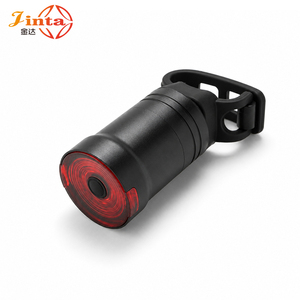
Compact 51*33mm housing with 400mAh rechargeable Li-po battery, dynamic deceleration sensor, power indicator, and IPX6 waterproofing.
Send an Inquiry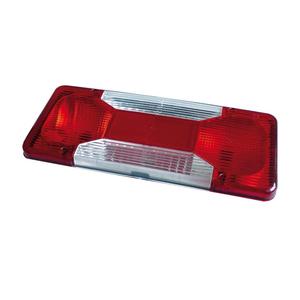
Heavy-duty transparent PC lens, direct OEM replacement for Europarts A805600501, integrating brake, reverse, and indicator functions.
Send an Inquiry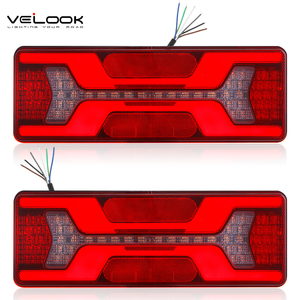
Dual-voltage ECE R6/R7 certified combination tail light designed for lorries, trailers, and heavy machinery operating in tough environments.
Send an Inquiry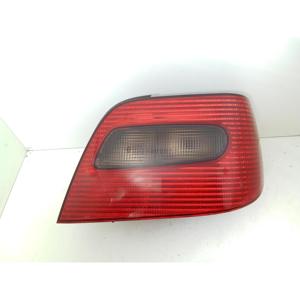
Exact-fit OEM replacement taillight cluster for Citroen Xsara Saloon Series RHY, built with optical grade PMMA lenses and UV stabilization.
Send an Inquiry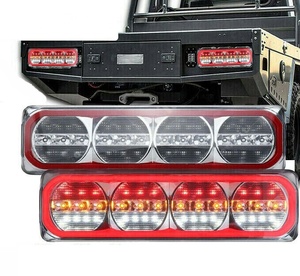
Multi-functional amber strobe, stop, and reverse combination light tailored for UTE trays, flatbed trucks, and utility fleet vehicles.
Send an Inquiry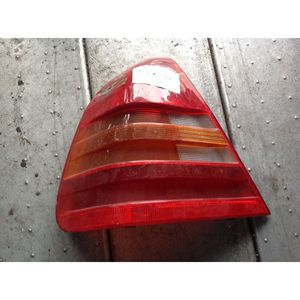
Factory-standard direct fit tail lamp unit compatible with Mercedes C-Class W202 platform, engineered for perfect photometrics and thermal stability.
Send an Inquiry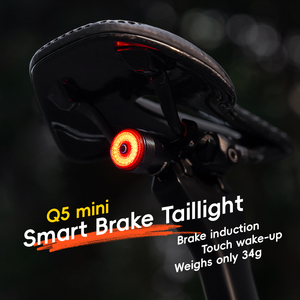
Ultra-wide 220° visibility COB panel featuring intelligent kinetic brake acceleration detection, auto power-save, and CNC alloy housing.
Send an Inquiry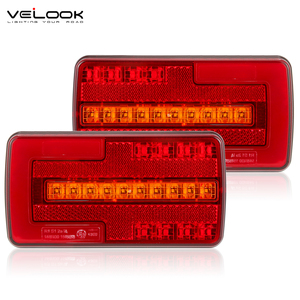
High-efficiency rectangular rear combination lamp set with dynamic indicator technology, IP67 sealed electronics, and ECE approval.
Send an InquiryThe global rear lighting manufacturing sector is undergoing a massive paradigm shift driven by stringent automotive safety mandates, rapid micro-mobility electrification, and breakthroughs in solid-state LED optoelectronics. Sourcing executives and Tier-1 procurement directors navigating the supplier ecosystem must evaluate factories beyond rudimentary production capacity. Modern rear light production demands holistic integration of Automated Optical Inspection (AOI), precision injection molding, ultrasonic lens hermetic sealing, and advanced thermal management circuits.
As European and North American regulatory bodies enforce tighter photometric distributions—such as UN ECE Regulation 6 (direction indicators), Regulation 7 (position and stop lamps), and Regulation 50 (micro-mobility signaling)—exporters must maintain in-house goniophotometer laboratories and environmental testing chambers. The transition from legacy incandescent light source assemblies to high-density Surface Mount Device (SMD) arrays and Chip-on-Board (COB) modules has altered supplier evaluation criteria, elevating thermal dispersion engineering and driver efficiency to top-tier priorities.
To assist procurement managers in conducting vendor audits, the comparative matrix below outlines the operational standards, technology stacks, and quality compliance metrics observed across leading OEM/ODM rear light manufacturing centers globally.
| Manufacturing Cluster | Primary Product Specialization | Key Optoelectronic Standards | SMT Line Automation | Environmental Protection | Tooling & Mold Lead Time |
|---|---|---|---|---|---|
| Eastern China (Ningbo / Changzhou) | Automotive Passenger & Commercial Truck Tail Lamps | ECE R6/R7/R87, DOT/SAE, IATF 16949 | Fully Automated (High-Speed Yamaha/Panasonic) | IP67 / IP69K (Hermetic Sonic Weld) | 35 - 45 Days |
| Southern China (Shenzhen / Dongguan) | Micro-Mobility, Smart E-Bike & Cycling COB Lights | ECE R50, StVZO Mark, CE, RoHS, UN38.3 | Automated SMT & Robotic Assembly | IPX6 / IPX8 (Silicone Gasket Seal) | 20 - 30 Days |
| Central Europe (Poland / Czechia Hubs) | High-End OEM Automotive & Specialist Machinery | ECE Euro-Standard, ISO 26262 Functional Safety | Industry 4.0 Integrated Smart Lines | IP68 / IP69K Laser Sealed | 50 - 65 Days |
| Taiwan OEM Industrial Parks | Aftermarket Tuning & High-Precision Optical Modules | SAE/DOT Compliant, E-Mark Certification | High-Precision Semi-Automated SMT | IP67 Sealed Housing | 30 - 40 Days |
Leading rear light manufacturers are investing heavily in five core technological vectors to capture high-margin market share and fulfill evolving consumer safety mandates.
Modern rear lights are transitioning from passive illumination to active safety nodes. Integrated 3D MEMS accelerometers deliver algorithmic deceleration sensing, automatically triggering high-intensity strobe patterns upon sudden braking without physical wire tap-ins. Furthermore, 24GHz mmWave radar units are increasingly integrated into commercial and e-bike rear lamps to alert riders of trailing vehicles up to 140 meters away.
Point-source LED hot-spots are being systematically replaced by Chip-on-Board (COB) and OLED micro-arrays. COB architecture packs hundreds of LED diodes directly onto aluminum substrates beneath diffusion lenses, creating unbroken, ultra-wide light diffusion bands. This yields 220° to 300° side visibility, significantly reducing side-impact collisions in urban traffic environments.
In passenger vehicles and high-tier commercial fleets, flexible organic LEDs (OLED) enable dynamic customizable lighting signatures. Multi-segment rear light panels can display hazard warnings, turn indicator sweeps, charging status indicators, and personalized graphic welcome patterns, controlled via CAN-bus or Bluetooth low-energy (BLE) firmware interfaces.
Responding to European Right-to-Repair directives and ESG procurement policies, forward-thinking factories are shifting away from permanently potted, single-use light units. Modern designs feature modular housings with replaceable 21700 or 18650 Li-ion cells, field-serviceable PCB drivers, and post-consumer recycled (PCR) polycarbonate casings designed for 10+ year service lives.
With the expansion of diverse electrical platforms (from 6V bicycle dynamos and 12V/24V commercial vehicle systems up to 36V-72V e-bike powertrain batteries), advanced rear light factories utilize wide-input buck-boost switching regulators. Integrated smart power ICs prevent thermal runaway and maintain consistent lumen output regardless of input voltage fluctuations.
When vetting potential rear light manufacturing partners, procurement directors must inspect critical checkpoints across the factory floor. High-volume manufacturing capability alone does not protect against field failure rates caused by water ingress, thermal degradation, or lens yellowing under harsh solar UV exposure.
1. Automated Optical & Photometric In-Line Inspection: Tier-1 export factories implement 100% inline AOI for SMT solder joint integrity, coupled with integrating spheres and goniophotometers to verify luminous flux (lumens), peak candela distribution, and chromaticity coordinates prior to final packaging.
2. Advanced Waterproof Hermetic Sealing Protocols: Depending on the vehicle sector, top exporters employ high-frequency ultrasonic welding, hot-plate welding, or automated polyurethane potting dispensations. For IP69K high-pressure washdown compliance, pressure differential leak testers must be utilized on 100% of production units.
3. Rigorous Accelerated Life Testing (ALT): Reliable factories maintain climate simulation chambers conducting combined thermal shock (-40°C to +85°C), salt spray corrosion testing (ASTM B117 standards for 96+ hours), and 3-axis sinusoidal vibration tests to simulate years of harsh road conditions.
Reflecting the design heritage and mechanical precision pioneered by Swedish visionaries and top-tier Asian optical manufacturing clusters, our partner factory network provides an unparalleled combination of Scandinavian design aesthetics, robust technical engineering, and lean manufacturing economics.
Our featured light architectures incorporate patented tactile interfaces—such as mechanical Power Wheel dials—allowing intuitive light mode adjustment while wearing heavy winter gloves, resolving a major pain point of conventional push-button lights.
Integrated mounting systems utilize universal quick-release interfaces compatible with standard round seatposts, oval aero posts, UTE trays, and helmet attachments, engineered to withstand intense off-road vibration.
Our manufacturing lines produce rear light systems fully certified for global market distribution, carrying E-Mark (ECE R6, R7, R50), StVZO, DOT/SAE, CE, FCC, RoHS, and REACH documentation for friction-free international import.
Connect directly with our senior engineering and export sales teams to receive technical datasheets, photometrics reports, sample kits, and volume discount structures.
Send an Inquiry
