High-performance illumination engineered for urban commuters, high-speed E-Bikes, and rugged off-road cycling. Available for turnkey OEM private labeling and customized ODM manufacturing.
In the rapidly evolving global micro-mobility market, active lighting systems have transitioned from simple add-on accessories to vital safety components subject to rigorous international regulations (such as Germany’s StVZO K-Mark regulations, European CE standards, and ISO 6742). As a premier OEM/ODM Bike Headlight Manufacturer operating advanced manufacturing facilities, we deliver engineering depth, production scalabilities, and customized optical solutions to premier bicycle OEMs, E-bike brand owners, global importers, and high-volume retail chains.
Our operational capabilities span the entire product life cycle: from industrial design drafting, ray-tracing optical simulation, and thermal management validation to surface-mount technology (SMT) assembly, automated IP68 waterproof chamber testing, and final custom private-label packaging. By choosing us as your manufacturing partner, your brand secures direct access to cutting-edge illumination technologies, flexible MOQ structures, complete technical IP confidentiality, and optimized global logistics workflows.
Our manufacturing matrix covers diverse operational requirements across both traditional human-powered bicycles and integrated electric micro-mobility vehicles (E-Bikes, E-Scooters, and Cargo Bikes). Below is an overview of our custom capabilities:
| Product Architecture | Optical / Voltage Configuration | Enclosure & Waterproofing | Target B2B Application |
|---|---|---|---|
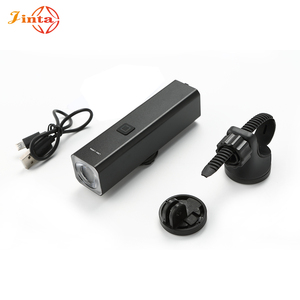
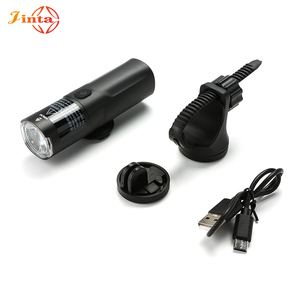
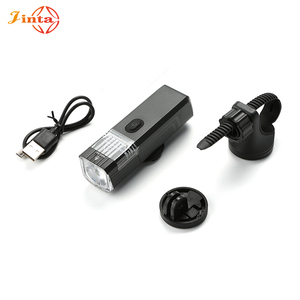
| Compact Commuter Series (e.g., Jinta 30x30mm) | 300 - 800 Lumens / Integrated Li-ion / USB-C Fast Charge | Anodized Aluminum / IPX6 Sealed Silicone Gaskets | Urban Commuter Bikes, City Fleet Rentals, Aftermarket Retail |
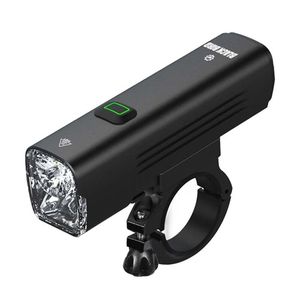
| High-Output Trail & Endurance (e.g., 1200L High Brightness) | 1200 - 2000 Lumens / Dual Cree/Luminus LEDs / 21700 Swappable Cell | CNC-Machined 6061 Alloy / Thermal Throttling / IP68 | Gravel, MTB, Bikepacking, Night Race Competition Equipment |
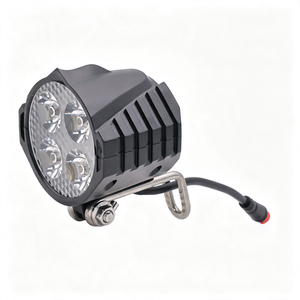
| Direct System E-Bike Headlights (e.g., Reliago 12-48V) | 12V - 60V Wide DC Input / 4W - 15W Draw / StVZO Cut-off Optics | Impact-Resistant ABS+PC or Die-Cast Alloy / IP67 Junctions | E-Bike OEM Assembly, CAN-bus / Bosch / Bafang Integration |
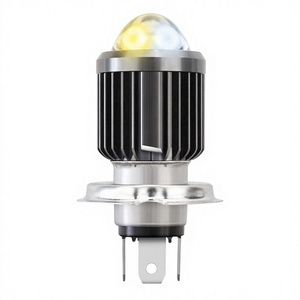
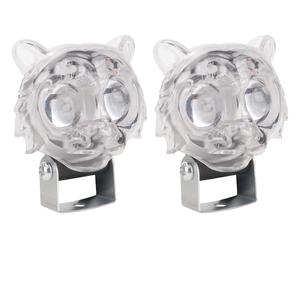
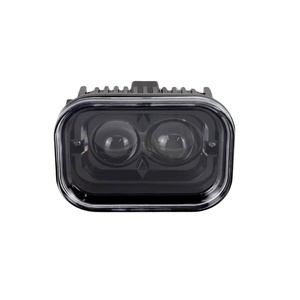
| Heavy-Duty Utility & Moto-Style (e.g., 4-Inch 30W / 7-Inch Round) | Dual-Color (3000K/6000K), High/Low Beam Matrix, Fisheye Optics | Die-Cast Heavy Heavy-Duty Aluminum / Integrated Heat Sink / IP68 | Speed Pedelecs, E-Cargo Trikes, Delivery Fleets, Electric Motorcycles |
Building world-class bicycle headlights demands a harmony of electrical engineering, precise plastic and metal tooling, photometric optic design, and rigorous quality assurance. Inspired by top-tier Scandinavian aesthetic minimalism and engineered under high-precision industrial standards, our manufacturing infrastructure provides quantifiable strategic advantages for wholesale buyers and brand owners.
Our in-house optical engineering team utilizes LightTools and ASAP ray-tracing software to develop proprietary Total Internal Reflection (TIR) lenses and anti-glare reflector cups. We specialize in producing glare-free cut-off beams that meet Germany's strict StVZO TA23 standards, preventing oncoming driver blinding while maximizing light throw on the road.
We operate 4 fully automated Yamaha SMT lines equipped with 3D Automated Optical Inspection (AOI). Our driver circuits feature constant-current step-down regulators, over-charge/over-discharge protection, real-time thermal management throttling, and reverse-polarity safeguards, keeping warranty defect rates below 0.15%.
Every batch undergoes stringent environmental stress tests inside our testing lab: including multi-axis vibration tables, thermal shock chambers (-30°C to +80°C), saltwater spray corrosion tanks, and 100% positive-pressure vacuum leak testing for every assembled housing prior to final packaging.
Whether you require minor cosmetic modifications (OEM) or complete ground-up mechanical and optical development (ODM), our standardized 6-stage engineering pipeline guarantees transparent execution and strict schedule adherence:
As global urban infrastructure pivots toward sustainable transportation, the bicycle lighting sector is undergoing unprecedented technological evolution. Strategic procurement managers must align their product roadmaps with five key technological and market trends over the coming 3-to-5-year horizon:
With the exponential expansion of the electric bicycle market (E-City, E-Cargo, E-MTB), standalone battery-operated lights are increasingly replaced by integrated headlights powered directly by the main drive battery. Today's commercial procurement requires wide-voltage drivers (12V to 60V DC) capable of seamlessly interfacing with lead motor systems including Bosch, Shimano, Brose, Bafang, and Ananda. Modern E-bike headlights must feature step-down switching regulators with high energy efficiency (>92%) and low thermal emission to safeguard sensitive onboard electronics.
Unfocused high-lumen flashlights produce hazardous dazzle for oncoming cyclists and motorists. European municipal regulations are increasingly adopting beam pattern requirements modeled on Germany’s StVZO standard. Future-proof product lineups mandate optical systems designed to project a sharp horizontal cut-off line—directing light forward onto the pavement while maintaining zero light spill above the horizontal line. This requires specialized free-form reflectors and high-precision TIR optics available from specialized OEM suppliers.
Mirroring automotive headlight design, premium urban and gravel bike headlights are shifting toward dual-beam functionality. Riders demand a wide, non-glare low beam for paved city paths combined with a focused, long-throw high beam (operated via a handlebar-mounted wired or wireless remote switch) for unlit rural trails or high-speed downhill descents. Integrating high-density dual-LED arrays into compact handlebars requires sophisticated thermal management and heat-pipe cooling structures.
Regulatory pressure (such as the EU Battery Regulation) is forcing a market shift away from non-replaceable, glued-in battery packs. Next-generation rechargeable bicycle headlights utilize user-replaceable, high-capacity 21700 lithium-ion cells (4000mAh to 5000mAh) or USB-C Power Delivery (PD) pass-through charging. This design allows ultra-endurance cyclists to swap spare batteries during multi-day events while significantly extending total product operational life cycle and reducing e-waste.
OEM lighting systems are progressively incorporating IoT elements, including integrated light intensity sensors for automatic day-to-night mode switching, motion-sensing auto-sleep functionality to conserve energy, and CAN-bus/Bluetooth communication modules that allow headlight control via the e-bike handlebar display unit or smartphone companion apps.
Selecting the right OEM/ODM factory is a strategic decision that directly impacts your brand reputation, warranty overhead, and profit margins. B2B buyers should evaluate potential manufacturing partners across four critical technical competencies:
Does the factory operate an internal Integrating Sphere (Goniophotometer)? Lumen ratings printed on retail boxes must reflect actual OTF (Out-The-Front) measured lumens rather than theoretical LED chip maximum specs. Insist on receiving IES or LDT photometric files to verify beam distribution graphs and lux levels at 10-meter distances.
High-lumen LEDs (1000+ lumens) generate significant junction heat. Without effective heat dissipation, LED efficiency degrades rapidly and color temperature shifts. Verify that the factory utilizes aluminum substrate PCBs, high thermal conductivity silicone interface pads (≥3.0 W/m-K), and engineered CNC aluminum alloy heat-sink fins with dynamic temperature protection circuitry.
Rechargeable lights represent electrical and fire safety responsibilities. Ensure your OEM factory installs dedicated BMS ICs offering over-current, short-circuit, over-voltage, over-temperature, and cell-balancing protection. Batteries must hold UN38.3 certification, IEC 62133 safety approval, and MSDS documentation for seamless sea/air freight clearance.
Cycling lights operate under extreme weather conditions (heavy rain, mud splash, high humidity). Demand IPX6 or IP67 ratings backed by third-party testing reports. Premium manufacturing uses sonic welding, silicone O-ring seals, hydrophobic air-permeable membranes, and potted connector wire harnesses.