The global automotive signal lighting industry is undergoing a structural transition from legacy incandescent light source assemblies to high-efficiency, micro-controlled LED and surface-emitting photonic modules. As vehicle architectures become increasingly reliant on high-voltage CANBUS networks, advanced driver-assistance systems (ADAS), and integrated body control modules (BCM), brake lights are no longer merely passive illumination units—they are critical active safety nodes requiring instantaneous millisecond rise times, high luminous thermal stability, and complete electromagnetic compatibility (EMC).
As China’s leading automotive brake light manufacturer and tier-1 OEM/ODM supplier, our engineering facilities bridge the gap between heavy-duty commercial vehicle durability, passenger car aesthetic customization, and international compliance rigor (IATF 16949, ISO 9001, ECE R7/R48, and FMVSS 108). This industry technical white paper details our certified product lineup, photonic performance standards, thermal dissipation frameworks, emerging automotive signaling trends, and key technical considerations for international procurement directors.
Explore our flagship automotive stop light assemblies, high-mount CHMSLs, commercial vehicle signal bars, and CANBUS error-free LED replacement lamps engineered for global vehicle fleets.
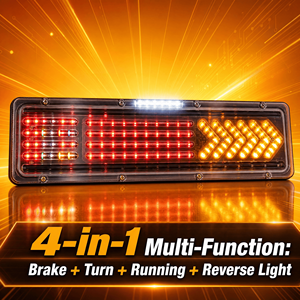
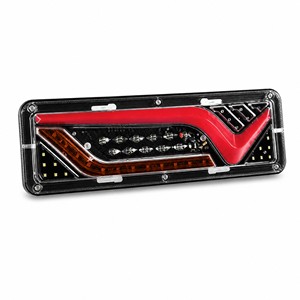
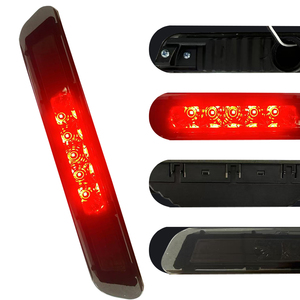
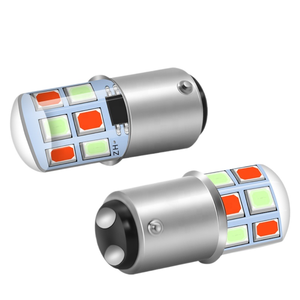
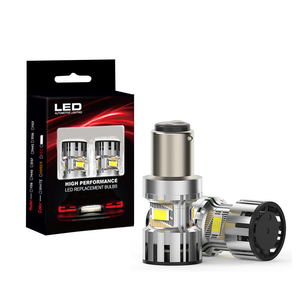
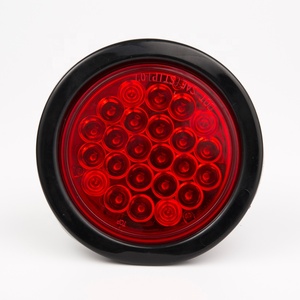
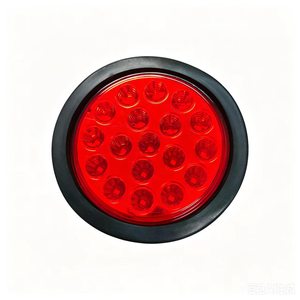
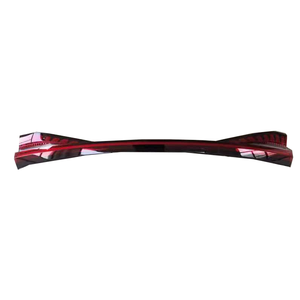
To assist automotive sourcing engineers and procurement managers in evaluating signal illumination technology, the table below provides a rigorous comparison between legacy halogen bulb assemblies, standardized aftermarket LED replacement lamps, and full-custom OEM integrated optical brake light assemblies manufactured at our facility.
| Engineering Metric | Legacy Halogen Lamp Assembly | Standard LED Bulb Retrofit (1157) | Custom OEM Sealed LED Module / CHMSL |
|---|---|---|---|
| Response Rise Time | 200 ms - 250 ms | < 1 ms (Instantaneous) | < 0.2 ms (Integrated Driver) |
| Photonic Luminous Efficacy | 12 - 18 LM/W | 80 - 110 LM/W | 120 - 140 LM/W |
| Thermal Management Strategy | Passive Radiation (High Heat) | Aviation Aluminum 6063 Heat Sink | Direct Copper Substrate PCB + Thermal Vias |
| Operating Voltage Range | 12V DC (Narrow ±10%) | 9V - 18V DC Integrated Driver | 9V - 32V DC Universal Constant Voltage |
| CANBUS Compatibility | Native Resistive Load | Integrated Smart IC Load Resistor | BCM Direct Digital Signal Interfacing |
| Ingress Protection Rating | IP54 (Socket Dependent) | IP65 Waterproof Base | IP68 / IP69K Ultrasonic Hermetic Seal |
| Expected Operational Lifespan | 1,000 - 2,000 Hours | 30,000 - 50,000 Hours | > 50,000 Hours (L70 Standard) |
Because semiconductor LEDs achieve peak light intensity in less than 1 millisecond compared to 200 milliseconds for tungsten filaments, a trailing vehicle traveling at 110 km/h (68 mph) gains approximately 6.1 meters (20 feet) of additional braking reaction distance. This rapid illumination rise time significantly reduces rear-end collision probability in highway emergency stop scenarios.
The global automotive procurement ecosystem is shifting rapidly under the pressure of vehicle electrification (EVs), autonomous driving sensor integration, and global carbon reduction mandates. B2B buyers must align their supply chain with manufacturing partners capable of meeting next-generation technical specifications:
Modern commercial vehicle fleets demand 9-36V wide-voltage internal drivers capable of transitioning seamlessly between 12V light commercial vehicles (LCVs) and 24V heavy-duty trailers without requiring distinct SKU inventories or external step-down converters.
As modern vehicles migrate toward centralized Body Control Modules (BCM) with sensitive pulse-width modulation (PWM) bulb outage monitoring, signal lights must incorporate active load tuning to suppress dashboard hyper-flashing and false code triggers without excessive heat dissipation.
Commercial trailers, off-road vehicles, and construction machinery are exposed to high-pressure hot-water washdowns. Sourcing trends favor ultrasonic plastic welding and automated polyurethane potting over legacy foam gaskets to eliminate moisture ingress permanently.
To maintain a competitive edge in global distribution, our R&D center integrates advanced optical, electronic, and material science developments into standard production workflows. Understanding these manufacturing breakthroughs empowers B2B buyers to request optimized design specs during custom OEM inquiries:
Dynamic ESS technology automatically detects high-G deceleration forces via onboard accelerometers or CANBUS telemetry. During sudden braking, the system transitions from solid red illumination to high-frequency strobe sequences (4-7 Hz), alerting trailing drivers to severe deceleration before kinetic force changes occur.
Replacing localized point-source LEDs with continuous Chip-on-Board (COB) arrays and total internal reflection (TIR) optical lightguides yields uniform, hot-spot-free light distribution across the housing. This improves aesthetic integration while optimizing wide-angle off-axis visibility up to 120 degrees.
High-performance LED arrays generate localized thermal stress that degrades luminous decay over time. Utilizing direct-bond copper (DBC) PCBs alongside Transient Voltage Suppression (TVS) diodes protects sensitivity against alternator load-dumps and voltage spikes up to 40V.
Choosing the right manufacturing partner in China requires verifying physical infrastructure, engineering capability, quality control protocols, and international market experience. Our production complex is optimized for high-volume automated manufacturing and flexible custom OEM development:
Our state-of-the-art manufacturing facility operates high-speed Panasonic and Yamaha SMT placement lines equipped with 3D Automated Optical Inspection (AOI) and Solder Paste Inspection (SPI). This guarantees microscopic component placement accuracy for LEDs, IC drivers, and protection diodes, maintaining a factory defect rate under 20 PPM.
Equipped with Type-C Goniophotometers and integrating spheres, our engineers verify luminous intensity distributions, chromaticity coordinates (ECE/SAE red spectral boundaries), and total flux output before mass tooling production.
Every production batch undergoes thermal shock chamber cycling (-40°C to +85°C), salt spray corrosion testing (96 Hours ASTM B117), electromagnetic interference (EMI/EMC CISPR 25 Class 3), and multi-axis vibration simulation.
From initial 3D CAD modeling and optical ray tracing simulation to rapid SLA prototyping and custom aluminum injection tooling, our engineering team turns concepts into physical samples in as little as 14 business days.
Comprehensive technical and commercial answers for OEM buyers, automotive distributors, importers, and fleet supply managers.
Partner directly with China's premier automotive LED brake light manufacturer. Contact our engineering team today for factory-direct bulk pricing, technical spec sheets, or custom OEM project evaluations.

