High-performance OEM/ODM bicycle headlights, universal wheel lights, e-bike lamps, and heavy-duty motorcycle LED solutions engineered for global compliance.
CE EMC & LVD Directive Compliant
Max Lumens Beam Capability
Water Immersion Protection
Certified Manufacturing Facility
In the rapidly modernizing urban mobility sector, the global market for bicycle, e-bike, and motorcycle illumination has evolved far beyond standard visibility accessories. Today, procurement directors, OEM brand managers, and automotive parts distributors face stringent safety directives across European Union markets, North America, and East Asia. Sourcing from accredited CE certified wheel light factories is no longer merely a regulatory checkbox—it is a critical strategy for risk mitigation, brand equity protection, and product performance assurance.
This technical whitepaper provides an exhaustive analysis of OEM production capabilities, optical engineering methodologies, international safety compliance parameters, and future sourcing trends. By examining how modern tier-1 manufacturers synthesize Scandinavian ergonomic minimalism with high-precision Asian manufacturing execution, commercial buyers can construct robust, resilient procurement strategies for 2025 and beyond.
Under the European Union Harmonized Legislation, LED wheel lights and vehicle lighting assemblies imported for resale must comply with the Electromagnetic Compatibility (EMC) Directive 2014/30/EU, the Low Voltage Directive (LVD) 2014/35/EU, and the Restriction of Hazardous Substances (RoHS) Directive 2011/65/EU. Non-compliant imports are subject to immediate customs seizure, safety recall notices via RAPEX, and severe commercial liability.
Modern vehicle-mounted lighting devices operate in challenging physical environments characterized by high vibration, wide ambient temperature fluctuations, direct water exposure, and electrical noise. To earn genuine CE certification, leading production facilities implement precise multi-layer engineering protocols during the research and development phase.
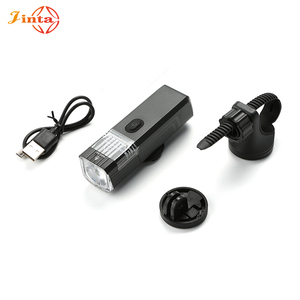
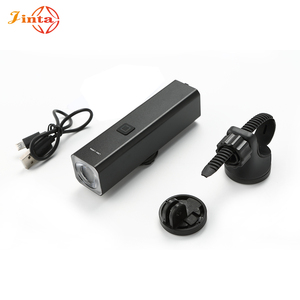
A. Advanced Optical Beam Engineering & Lens Thermal Management: The core difference between low-grade consumer flashlights and industrial-grade bicycle/wheel headlights lies in optical ray tracing. High-end factories utilize total internal reflection (TIR) acrylic optics or convex dual-color fisheye lenses. These optical setups direct luminous flux cleanly onto the road surface while maintaining a sharp horizontal cut-off beam pattern. This prevents glare for oncoming traffic—a mandatory feature for European road safety regulations like Germany's StVZO standard.
Furthermore, high-output LED chips (such as CREE, OSRAM, or Luminus arrays) operating at 800 to 1500 lumens generate significant localized heat. Leading wheel light factories utilize die-cast ADC12 aluminum alloy housings or integrated copper PCB heat sinks. Maintaining junction temperatures below 85°C ensures that thermal degradation does not reduce LED operational lifespan beyond the 50,000-hour benchmark.
B. Power Supply System & Wide-Voltage Compatibility (12V-48V): The expansion of the global E-bike and light electric vehicle (LEV) market requires flexible driver topologies. Standard bicycle front lights rely on internal USB Type-C rechargeable lithium-ion cells (typically 18650 or high-capacity 21700 formats, such as 4000mAh units). Conversely, specialized OEM E-bike headlights must accept wide direct-current input voltages ranging from 12V to 48V (or even up to 60V for electric mopeds and scooters).
| Product Category | Operating Voltage | Primary LED Optical Tech | Water Resistance | Target Certification Standard |
|---|---|---|---|---|
| Compact Urban Bike Headlights | 3.7V Nominal (USB-C) | Single TIR Lens / Multi-Mode COB | IPX6 Sprayed Water Proof | CE (EMC), RoHS, FCC |
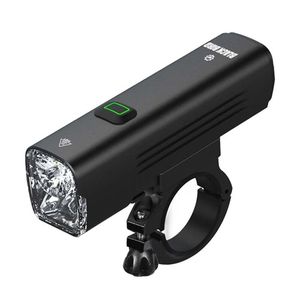
| High-Lumen Endurance Lights | 3.7V - 7.4V (21700 Cell) | Dual Anti-Glare Reflector Array | IPX7 Water Immersion (1m) | CE, UN38.3 (Battery Safety), StVZO |
| Integrated E-Bike Front Lamps | 12V – 48V DC Direct | High-Flux Surface Mount LED + Heatsink | IPX6 / Sealed Harness | CE, EN 15194 EPAC Standard |
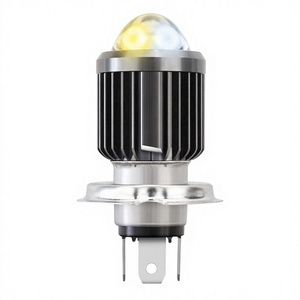
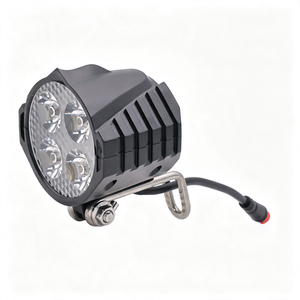
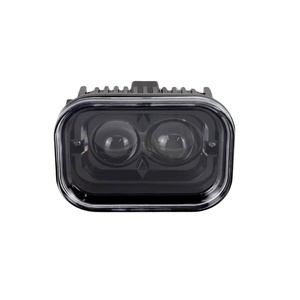
| Motorcycle Dual-Color Bulbs | 9V – 80V DC Universal | Dual-Color (Yellow/White) Fisheye Lens | IP68 Dust & Water Proof | CE, E-Mark (ECE R113) Compatible |
Analyzing global retail and distribution data reveals significant shifts in consumer buying habits and commercial fleet procurement specifications. Buyers evaluating factory partnerships must align their product portfolios with three major technology vectors over the next five years:
Vector 1: User-Serviceable Architecture & Circular Economy Compliance: The European Commission’s Ecodesign Regulation has reshaped consumer electronics manufacturing. Traditional sealed plastic light assemblies that force consumers to discard the entire unit when the battery degrades are rapidly being phased out. Premier factories now engineer headlights with user-replaceable 21700 lithium-ion batteries. Utilizing modular threaded aluminum battery caps allows riders to carry spare pre-charged cells for ultra-endurance rides, while allowing distributors to offer sustainable, long-life products with reduced warranty waste.
Vector 2: Integrated Tactile Control Mechanisms (Patented Power Wheels vs. Push-Buttons): User ergonomics under extreme weather conditions represent a key product differentiator. Standard micro-push buttons are notoriously difficult to operate when wearing thick winter cycling gloves or riding over rough terrain. Advanced ergonomic designs now feature rotating dial switches (or "Power Wheels"). This allows cyclists to turn a tactile bezel to smoothly adjust lumen output across multiple power modes or instantly dim high beams when approaching oncoming traffic. Factory patent ownership over these tactile dial interfaces creates immediate market differentiation for OEM brands.
Vector 3: High-Density COB (Chip-on-Board) Wide-Angle Visibility: For wheel-mounted LEDs, side-visibility tail lights, and rim safety gear, traditional surface-mount diode (SMD) arrays are being superseded by continuous COB technology. COB LEDs yield a seamless, uniform line of light across sculpted, curved surfaces. This expanded surface emission drastically enhances 360-degree lateral traffic presence, reducing side-impact collision risks at urban intersections.
Selecting the ideal manufacturing partner requires evaluating a facility's laboratory testing infrastructure, quality management systems, and design heritage. Leading OEM/ODM suppliers distinguish themselves through comprehensive in-house testing facilities and rigorous quality control protocols.
Recognized by global design benchmarks including Eurobike, German Design, European Product Design, and iF Design Awards. Blending Scandinavian aesthetic minimalism with robust functional performance.
Equipped with computerized integrating spheres, optical goniophotometers, and spectroradiometers to measure exact lumen output, lux distribution, color temperature (CCT), and CRI accuracy.
In-house IPX6 high-pressure water jet chambers, IPX7 immersion testing tanks, thermal shock chambers (-40°C to +85°C), and automated 3-axis vibration test benches.
Full documentation suites for CE (EMC/LVD), RoHS, REACH, FCC, UN38.3, and MSDS battery transportation safety reports available for seamless global customs clearance.
Rapid rapid-prototyping capabilities, custom optical tooling, laser-etched branding, bespoke color anodizing, and tailored packaging for private label brands.
Trusted supplier to independent bike shops, national sporting goods chains, e-bike OEMs, and aftermarket automotive importers across Europe, North America, and Australia.
When conducting on-site or third-party (e.g., SGS, TÜV, Bureau Veritas) audits of a wheel light manufacturing facility, commercial buyers should execute a structured four-stage evaluation process:
Stage 1: Raw Material & Component Inspection (IQC): Verify that incoming LED chips, circuit board PCBs, silicon sealing gaskets, and rechargeable battery cells undergo incoming quality checks. Ensure lithium cells originate from certified tier-1 manufacturers with explicit batch trace codes and valid UN38.3 safety certification.
Stage 2: Surface-Mount Technology (SMT) & PCB Assembly: Inspect the automated SMT production lines. High-reliability factories utilize automated optical inspection (AOI) machines post-reflow soldering to detect cold solder joints, missing components, or micro-bridging on miniaturized driver boards.
Stage 3: Automated Burn-In & Aging Test: Every assembled lighting device must undergo a mandatory 100% burn-in testing cycle (typically 2 to 4 hours of continuous high-lumen operation). This process forces early component failure in underperforming capacitors or driver ICs prior to final encapsulation, ensuring field defect rates remain below 0.1%.
Stage 4: IPX Ingress & Drop Testing Sampling: Sample units from each batch must undergo destructive drop testing (1.5 meters onto concrete from 6 angles) and submerged water pressure testing to confirm that sonic welding or silicon gasket seals maintain structural integrity under mechanical stress.
Expert technical answers covering CE certification compliance, custom OEM tooling, battery safety protocols, and factory auditing standards.
A authentic CE certification for wheel lights and bike headlights encompasses two primary test pillars: Electromagnetic Compatibility (EMC Directive 2014/30/EU, under standards EN 55015 and EN 61547) and the Low Voltage Directive (LVD 2014/35/EU, if connected to AC chargers or direct DC power above standard low thresholds). Additionally, products must possess a complete RoHS 2.0 (Directive 2011/65/EU & 2015/863) heavy metal analysis report issued by an accredited ISO 17025 laboratory.
The patented Power Wheel dial switch allows riders to adjust light intensity smoothly via a rotary bezel rather than cycling through a fixed push-button sequence. This allows cyclists operating in cold conditions to adjust modes effortlessly while wearing thick winter gloves. Furthermore, it enables instant dimming when approaching oncoming vehicles, eliminating dangerous temporary glare for oncoming traffic.
High-capacity 21700 lithium-ion cells (such as 4000mAh units) offer a 30-35% higher energy density than traditional 18650 cells without adding proportional weight. By engineering lights with threaded, user-replaceable battery compartments, riders can quickly swap fresh cells during ultra-endurance rides. From an environmental perspective, this design prevents the entire light assembly from being discarded when the lithium cell reaches its natural charge-cycle limit.
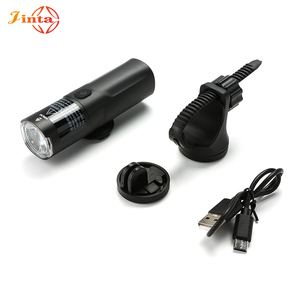
Yes. High-performance models like the Volume 1500 and 800 series utilize standardized GoPro-style mounting interfaces paired with flexible silicone straps or rigid aluminum clamps. This mounting geometry fits standard 25.4mm, 31.8mm, and 35mm round handlebars, as well as oval or tear-drop aerodynamic road and gravel bike handlebars.
Our OEM E-bike lighting products feature wide-voltage buck converter drivers supporting direct inputs from 12V DC up to 48V DC (with heavy-duty models handling up to 80V DC). This enables seamless integration directly into central E-bike drive system batteries (such as Bosch, Shimano, Bafang, or Brose systems) without requiring external step-down converters.
Standard off-the-shelf inventory orders start at low MOQs (50–100 units). For custom laser-etched brand logos on anodized aluminum housings, MOQs typically start at 500 units per model. Full custom retail packaging (custom color boxes, manuals, and point-of-sale display master cartons) generally requires an MOQ of 1,000 to 2,000 units depending on packaging structural specifications.
During mass production, sample units from every assembly batch undergo vacuum leak testing prior to circuit board installation. Finished units undergo continuous 30-minute water spray testing (IPX6) or complete water immersion testing at a 1-meter depth for 30 minutes (IPX7). Double-o-ring silicon seals around battery caps and sonic-welded lens housings ensure long-term ingress protection.
All battery-integrated shipments include complete safety documentation packages, including UN38.3 test summaries, 1.2-meter drop test compliance certificates, MSDS (Material Safety Data Sheets), and Air/Sea Transport Safety Declaration reports. This ensures smooth air freight and ocean container customs clearances globally.

