Precision-molded PMMA lens arrays engineered for extreme photometric performance, wide-angle nighttime reflection, and weather-proof mechanical reliability.
Combining Scandinavian aesthetic precision with automated, high-volume injection molding to deliver certified passive optical devices to worldwide markets.
Understanding Coefficient of Luminous Intensity (CIL), Snell’s Refraction Laws, and Compliance Frameworks across Global Municipal Safety Regulations.
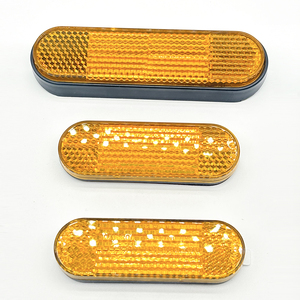
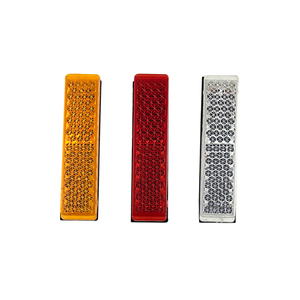
Passive bicycle reflectors do not emit light independently; they function via retroreflection—returning light rays along the exact vector of incoming vehicle headlights. Achieving this requires precise optical engineering. Our manufacturing facility utilizes high-grade Polymethyl Methacrylate (PMMA), molded with internal cube-corner micro-prisms angled at precisely 90 degrees to one another.
When a vehicle headlight strikes the smooth exterior face of the reflector lens, the light refracts through the PMMA medium, strikes three mutually perpendicular internal mirrors, and bounces back directly toward the driver's eye level (the angle of observation $\alpha$). Standard acrylic polymers suffer from spectral absorption and surface yellowing over time, causing a degradation in the Coefficient of Luminous Intensity (CIL). Our optical-grade virgin PMMA ensures a refractive index ($n = 1.49$) that maintains maximum photometric return across entrance angles ($\beta$) up to $\pm 50^\circ$.
Selecting the correct material matrix is essential for regional homologation. The table below outlines structural and optical trade-offs across reflector grades:
| Technical Parameter | Standard Commercial Acrylic | Engineering PMMA (Catadioptric) | Micro-Prismatic Film + Polycarbonate |
|---|---|---|---|
| Refractive Index (n) | 1.41 - 1.44 | 1.49 (Optical Grade) | 1.58 (Core Film dependent) |
| Photometric CIL Index | ~150 cd/lx | > 700 cd/lx (CE Compliant) | > 900 cd/lx |
| UV Degradation Resistance | Yellows in 12–18 Months | 10+ Years UV Stable | 5–7 Years Layer Delamination Risk |
| Ultrasonic Weld Integrity | Brittle Shear Risk | IP67 Hermetic Seal | Edge Sealing Required |
| Global Standards Met | Basic Consumer Goods | EN 13356, EN 17353, ISO 6742-2, CPSC | EN 17353 Type B3 |
A common failure point in low-grade bicycle reflectors is moisture ingress. When water or dust accumulates inside the internal prism cavities, the air-to-polymer interface is disrupted, changing the refractive index and completely destroying the catadioptric reflection mechanism.
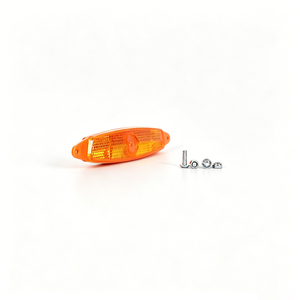
To counteract environmental degradation, our production lines feature fully automated Ultrasonic Lens Welding. The PMMA front lens is fused to an opaque ABS backing casing at high ultrasonic frequencies, creating a seamless hermetic molecular bond. Each batch undergoes immersion pressure testing to guarantee IP67 dust and water tightness, ensuring consistent performance in torrential rain, freeze-thaw cycles (-40°C to +85°C), and road salt exposure.
Combining rigorous Scandinavian aesthetic principles with world-class Chinese manufacturing scale, our engineering ecosystem supports your brand from concept to shelf.
Recognized by prestigious bodies such as the Eurobike Award, German Design Award, and iF Design Award, our reflector designs balance high photometric compliance with clean, contemporary visual aesthetics that elevate premium bicycles.
Every product batch is photometrically validated using in-house spectrophotometers and goniophotometer darkrooms to guarantee strict adherence to European (EN 13356, EN 17353, StVZO), American (CPSC 16 CFR 1512), and Japanese (JIS D 9452) safety mandates.
From custom geometric frame integrated reflectors to branded spoke clip matrices, our rapid tooling department delivers functional 3D prototypes in 48 hours and completed steel injection molds within 21 business days.
How evolving urban micro-mobility legislation and material innovations are reshaping wholesale purchasing specifications worldwide.
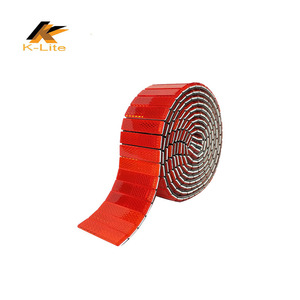
With electric bicycles and e-scooters operating at higher average speeds (25–45 km/h), regulatory bodies across the EU and North America are mandating wider-angle side retroreflection (ISO 6742-2). Sourcing directors are shifting away from traditional pedal reflectors toward integrated frame and spoke micro-prismatic arrays that maintain retroreflection even under steep lean angles.
Environmental, Social, and Governance (ESG) mandates are driving top European bike brands to demand eco-certified raw materials. Advanced molecular recycling now permits 100% bio-attributed PMMA resins that retain crystal optical clarity ($n = 1.49$) without compromising light transmission or weather durability, helping brands reduce product carbon footprints by up to 45%.
Modern urban commuting gear is increasingly fusing active surface COB LEDs with passive retroreflective backing matrices. Should an active battery exhaust itself mid-ride, the underlying catadioptric reflector acts as an uninterrupted optical safety net, satisfying both active lumen rules and passive CE EN 17353 visibility mandates simultaneously.
Essential technical, regulatory, and logistics information for brand managers, OEM buyers, and wholesale procurement directors.

