0%

Choosing the right high-visibility running gear supplier requires more than comparing bright colors and wholesale prices. Visibility must remain effective at dawn, dusk, rain, and poorly lit streets. A jacket that glows under showroom lights may perform differently after repeated washing. That gap matters.

The World Health Organization reports that road traffic injuries remain a leading cause of death among people aged 5–29. Its road-safety expert, Dr. Etienne Krug, states, “Road traffic injuries are a major public health problem, but they are preventable.” For runners, prevention begins with earlier recognition by drivers, cyclists, and other road users. NHTSA’s Traffic Safety Facts also recorded more than 7,300 pedestrian deaths in the United States during 2023. Night conditions remain especially dangerous. These figures do not prove that clothing alone prevents collisions. They do show why product design deserves careful attention.

This guide examines top high-visibility running gear suppliers worldwide through measurable details. We consider reflective coverage, fluorescent fabric, weather resistance, fit, washing durability, certification, and supply consistency. ANSI/ISEA 107 provides a useful benchmark for high-visibility apparel, although not every running product is designed for formal workplace certification. Supplier claims still require checking. Materials can fade. Seams can weaken. Sizing can disappoint.

No ranking is flawless. Regional standards, climate, and running habits change the decision. A lightweight vest may suit a humid city, while an insulated jacket may work better on a cold rural route. The strongest suppliers combine tested materials with practical design. They also explain limitations clearly, which is often overlooked.
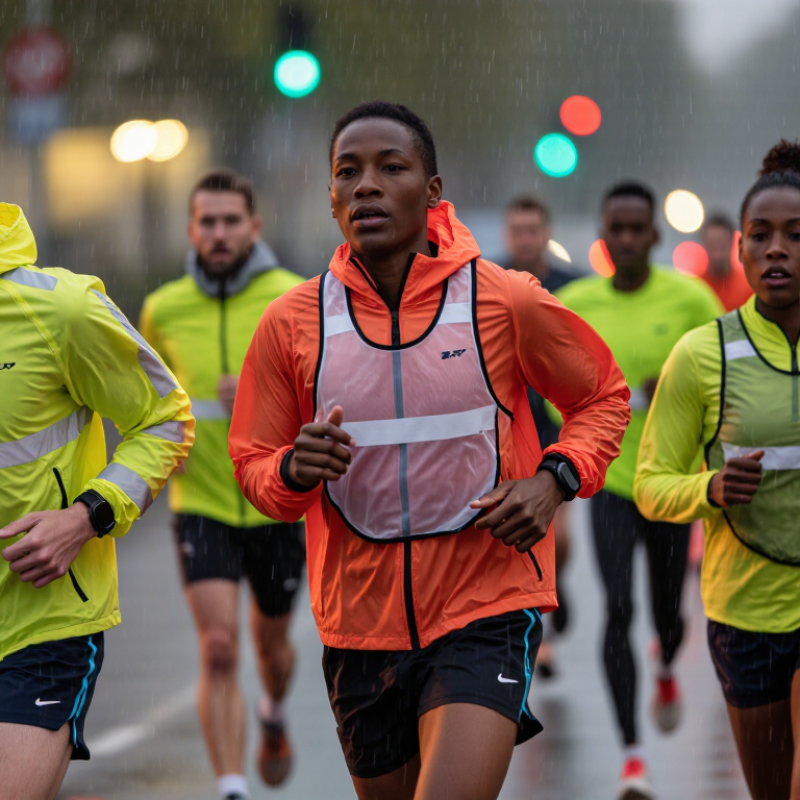
Top High Visibility Running Gear Suppliers Worldwide

Definition and Importance of High-Visibility Running Gear

High-visibility running gear is clothing designed to help runners stand out in poor lighting. It usually combines bright colors, reflective panels, and breathable materials. Bright fabric improves visibility during daylight, while reflective details return light from vehicle lamps after sunset. Common items include vests, jackets, shirts, shorts, caps, and ankle bands.

Its importance is practical, not decorative. A runner may appear clearly against a dark road, wet pavement, or shaded trail. Reflective strips on the chest, back, wrists, and lower legs can show movement from several directions. This matters because drivers and cyclists often notice motion before they recognize a person. Good gear should also fit securely, avoid blocked vision, and remain comfortable during sweating or rain. A loose vest can flap, distract, and reduce confidence.

When comparing suppliers worldwide, buyers should examine fabric density, reflective coverage, stitching, wash durability, and sizing consistency. Product testing should reflect real conditions, including headlights, cloudy mornings, and damp streets. Bright color alone is not enough. Some garments look vivid indoors but fade quickly outdoors. That weakness deserves attention. Runners should still choose safe routes, use lighting, and stay alert. High-visibility gear supports awareness; it cannot replace it.

Key Standards for Evaluating Global Running Gear Suppliers

Evaluating global running gear suppliers requires more than comparing catalog photos and quoted prices. Visibility begins with measurable performance: fluorescent fabric in daylight, retroreflective trims at night, and stable color after washing. Ask for independent test reports, material specifications, and batch records. Do not accept vague claims. Test the sample yourself.

Standards must match the product’s intended use and sales market. Some garments may align with recognized high-visibility clothing standards, while others are simply visibility-enhanced sportswear. That distinction matters. For products claiming formal high-visibility protection, verify whether EN ISO 20471, ANSI/ISEA 107, or another relevant local standard applies. Request the exact standard edition, certification scope, and test limitations.

Supplier expertise also appears in construction details. Check reinforced seams, secure zipper ends, breathable panels, and reflective elements after repeated movement. Check size grading across samples. An attractive prototype can hide inconsistent sleeves or uncomfortable neck binding. Those flaws emerge quickly on a long, wet run.

Reliability depends on more than product testing. Review factory traceability, inspection procedures, worker-safety policies, environmental controls, and documented corrective actions. Ask how defects are handled, not only how orders are shipped. Clear lead times and realistic production capacity reduce avoidable pressure. Still, paperwork is not proof. Independent audits can help, but they are snapshots. Repeat sampling, wash trials, low-light testing, and direct communication reveal more. Even experienced buyers misjudge comfort from photographs. That mistake deserves attention.

Top High Visibility Running Gear Suppliers Worldwide

Key Standards for Evaluating Global Running Gear Suppliers

This procurement scorecard uses a 100-point model for comparing high-visibility running gear suppliers without ranking individual companies. Product visibility and compliance receive the highest weighting because recognized safety standards, including ISO 20471 and ANSI/ISEA 107, assess garment design, fluorescent materials, retroreflective materials, and visibility performance.

The weights are an illustrative buyer benchmark. Actual supplier qualification should verify laboratory test reports, material composition, wash durability, sizing consistency, lead times, and documented quality-control procedures.

Leading High-Visibility Running Gear Suppliers Worldwide

Leading high-visibility running gear suppliers worldwide serve runners who train before sunrise, after work, or along poorly lit roads. Their products usually combine fluorescent fabrics with reflective panels, piping, or printed details. A reliable supplier should explain where materials come from and how visibility features are tested. Clear product data matters more than attractive catalog photography.

Experienced suppliers provide gear for different climates and running habits. Lightweight mesh can reduce heat during humid summer sessions, while brushed layers help in cold, windy conditions. Useful details include secure phone pockets, flat seams, adjustable cuffs, and reflective placement on moving areas. Bright color alone is not enough. Visibility depends on distance, light direction, garment fit, and movement.

Leading suppliers also maintain consistent sizing and inspect stitching, zippers, and reflective transfers before shipment. Independent testing can support claims about colorfastness, wash durability, and night-time reflectivity. Still, no supplier gets every detail right. I have seen reflective strips peel after repeated washing, even when the first sample looked excellent. Buyers should request samples, washing instructions, compliance documents, and production timelines. Communication can reveal more than a polished website. Suppliers who discuss limitations openly often deserve closer consideration. Many overlook women’s fit and smaller adult sizes. That remains a practical weakness in parts of the global market.

Product Categories and Safety Features to Compare

Choosing high-visibility running gear starts with product categories, not color alone. Lightweight vests suit warm evening runs, while jackets protect against wind and rain. Reflective tights, caps, and ankle bands add movement-level visibility. Small lights help too, especially on unlit paths. They are not a substitute for reflective material.

NHTSA’s 2022 Traffic Safety Facts recorded 7,388 pedestrian deaths in the United States. That figure makes visibility a serious equipment issue, not a fashion preference. Compare suppliers against ANSI/ISEA 107-2020 or ISO 20471 guidance. Look for fluorescent yellow, orange, or green fabric in daylight. Check for retroreflective panels across the chest, back, arms, and legs. A narrow strip on the front is not enough. Aim for 360-degree coverage.

Ask for independent test reports covering colorfastness, reflectivity, water resistance, and wash durability. Reflective performance can decline after repeated washing. Fit also matters. Loose fabric may twist and hide reflective sections during arm movement. Breathable mesh can reduce overheating, but large mesh areas may weaken visibility. Some suppliers provide measured visibility distances, yet these claims need careful verification. I would also inspect seams, zipper placement, and battery access on lighted products. Brightness alone can mislead. A practical comparison should include comfort after five kilometers, not only laboratory figures. The best choice may still fail if runners refuse to wear it.

Top High Visibility Running Gear Suppliers Worldwide - Product Categories and Safety Features to Compare

Product Category Typical Use Visibility Components to Compare Common Materials Key Safety Features Relevant Standards or Test References Weather and Comfort Factors Supplier Verification Points
High-Visibility Running Vest Road running, commuting, trail running, and low-light training where an outer layer is preferred. Fluorescent yellow Fluorescent orange-red Retroreflective bands Front and rear coverage Lightweight polyester mesh, woven polyester, or polyester-elastane blends. 360-degree visibility, reflective vertical and horizontal elements, secure closures, low-profile seams, and unobstructed reflective areas when worn over clothing. EN ISO 20471 for certified high-visibility garments; ANSI/ISEA 107 for applicable high-visibility apparel in the United States. Certification must be confirmed for the exact model. Breathable mesh, low weight, adjustable fit, packability, and resistance to color fading or reflective-surface cracking. Ask for the garment class, size range, wash-test results, reflective-area measurement, and certification documentation.
Reflective Running Jacket Night running, cool-weather road use, and light rain conditions. Reflective piping Reflective panels High-contrast body colors Sleeve visibility Polyester or nylon woven shell, laminated fabric, mesh lining, and elastane panels. Reflective elements visible from front, side, and rear; covered zippers; adjustable hem; secure pockets; and features that prevent reflective details from being hidden by a backpack. EN ISO 20471 or ANSI/ISEA 107 where the product is marketed as certified high-visibility apparel; ISO 13688 may apply to general protective-clothing requirements. Water-repellent finish, wind resistance, breathability, ventilation openings, hood adjustment, and durable water-repellent treatment without excessive noise. Check hydrostatic or water-repellency test data, breathability ratings, seam construction, zipper quality, and care-label durability.
High-Visibility Running Shirt Warm-weather training, daytime running, and evening running in moderate temperatures. Fluorescent fabric Reflective logos or strips Shoulder visibility Side visibility Moisture-wicking polyester, recycled polyester, polyester-elastane jersey, or lightweight mesh. Reflective elements positioned on the torso and sleeves, flat seams, secure neckline, and color contrast that remains visible in daylight. EN ISO 20471 or ANSI/ISEA 107 only when the complete garment satisfies the applicable requirements; otherwise, reflective trim should not be treated as certification. Moisture management, quick drying, odor-control treatment, UV protection claims supported by testing, and resistance to repeated washing. Request fabric color test results, reflective trim performance after washing, fabric weight, moisture-wicking test method, and size grading.
Reflective Tights and Running Pants Cold-weather running, early-morning training, and low-light outdoor exercise. Ankle reflectivity Calf panels Side-leg details Contrast inserts Nylon-elastane, polyester-elastane, brushed knit, and weather-resistant stretch fabrics. Reflective details that remain visible during leg movement, flat seams, secure waistband, ankle mobility, and non-slip or adjustable hems. Garment-specific testing is required for EN ISO 20471 or ANSI/ISEA 107 claims; general textile performance may be tested for colorfastness and dimensional stability. Thermal insulation, stretch recovery, wind resistance, moisture transfer, pocket security, and resistance to pilling. Compare reflective placement during motion, stretch-cycle durability, wash performance, waistband construction, and fit consistency across sizes.
Reflective Running Shorts Warm-weather road running, track workouts, and high-mobility training. Side reflective strips Rear reflective details Fluorescent accents Lightweight polyester, nylon, elastane, and breathable mesh inserts. Visibility from side angles, secure drawcord, inner liner, reduced chafing, and reflective details positioned above common backpack or waist-belt lines. Relevant apparel standards depend on the intended claim and market; reflective trim performance should be supported by laboratory or supplier test records. Quick drying, breathability, stretch, liner support, pocket stability, and resistance to salt, sweat, and repeated washing. Verify reflective trim adhesion, seam strength, colorfastness, liner coverage, and pocket performance during running movement.
Reflective Running Cap or Beanie Head-level visibility during night running and cold-weather training. Reflective logo areas Reflective piping High-contrast crown Rear visibility Polyester, recycled polyester, nylon, elastane, fleece, or moisture-wicking technical knit. Reflective details visible from multiple angles, secure fit, non-obstructive design, and brim or cuff stability during movement. Product-level high-visibility certification should not be assumed unless the complete item has been assessed under a recognized standard. Sweat management, thermal insulation, ventilation, brim structure, fit adjustment, and wash durability. Check reflective coverage, head-size range, colorfastness, seam comfort, and whether the reflective material remains flexible after laundering.
Reflective Gloves Cool-weather running, cycling-compatible training, and hand-level signaling in low light. Reflective backs Reflective fingers Fluorescent fabric Signal-colored palms Polyester fleece, nylon, elastane, synthetic leather, and silicone grip materials. Reflective elements on the back of the hand, secure wrist closure, grip surface, touch-screen compatibility, and sufficient dexterity for emergency signaling. General high-visibility garment standards may not cover every glove design; any EN or ANSI claim should be checked against the exact product scope. Warmth-to-weight ratio, wind resistance, moisture management, palm grip, and compatibility with wet conditions. Verify reflective attachment, grip durability, touchscreen performance, seam strength, and thermal performance after washing.
Reflective Waist Belt or Running Belt Carrying keys, phone, identification, and small essentials while adding low-light visibility. Reflective webbing 360-degree trim Fluorescent panels Light attachment point Polyester or nylon webbing, stretch mesh, elastane, coated fabric, and water-resistant zippers. Stable fit, non-bounce construction, secure zipper, reflective coverage around the waist, and compatibility with clothing layers. Reflective accessory claims require product-specific test evidence; apparel certification standards do not automatically apply to accessories. Sweat resistance, water resistance, ventilation, adjustability, capacity, and resistance to abrasion from repeated use. Compare reflective coverage, usable storage volume, buckle strength, zipper testing, load stability, and colorfastness.
Reflective Running Backpack or Hydration Vest Long-distance running, trail running, commuting, and carrying hydration or safety equipment. Reflective front panels Reflective rear panels Shoulder-straps visibility Light loops Ripstop nylon, polyester mesh, stretch woven fabric, foam padding, and TPU-coated materials. Front, side, and rear visibility; stable load distribution; whistle or emergency attachment point; secure closures; and reflective areas that remain exposed when loaded. Specific visibility and load-carrying claims require product-level evidence. General textile, colorfastness, and material safety tests may also be relevant. Breathable back panel, hydration compatibility, water resistance, load capacity, chafe control, and adjustable sternum or waist straps. Request capacity measurements, reflective-area details when fully packed, abrasion testing, buckle-cycle testing, and waterproofing data.
Clip-On Safety Light Supplementary front, rear, or side identification during dusk, night, and poor-visibility conditions. White front light Red rear light Flashing mode Side visibility Polycarbonate or ABS housing, silicone lens or mount, rechargeable lithium battery, or replaceable cells. Multiple modes, secure clip, visible charging indicator, protected switch, weather-resistant housing, and sufficient separation from clothing or equipment. Ingress protection may be stated using IEC 60529 IP ratings; electrical and battery compliance depends on the market and product configuration. Battery runtime, charging time, cold-weather performance, water resistance, impact resistance, and mounting stability. Check measured runtime by mode, lumen or candela test method, IP test report, battery transport documentation, and switch durability.
LED Running Vest or Lighted Harness Maximum active visibility for road running, outdoor events, and poorly lit routes. Front white LEDs Rear red LEDs Side illumination Reflective backup elements Polyester webbing, nylon mesh, silicone light guides, LED modules, and rechargeable battery packs. Front and rear color separation, 360-degree visibility, secure adjustment, low-bounce fit, reflective backup visibility, and protected electrical connections. IEC 60529 may be used for ingress protection; applicable electrical, battery, EMC, and market-specific compliance documentation should be requested. Runtime, charging safety, water resistance, ventilation, battery placement, flexibility, and visibility when worn over a jacket or backpack. Compare verified runtime, brightness measurement method, charging connector protection, battery certifications, LED temperature, and replacement-part availability.
Reflective Shoe Accessories Lower-body visibility for road running, especially where ankle and foot movement help attract attention. Ankle bands Reflective laces Heel patches LED clips Elastic webbing, polyester yarn, reflective film, silicone, molded plastic, and small LED components. Visibility during movement, secure attachment, non-slip design, compatibility with different shoe constructions, and no interference with the runner’s gait. Reflective material performance should be supported by supplier test data; electrical products may require applicable battery and ingress-protection documentation. Washability, sweat resistance, abrasion resistance, weight, attachment security, and compatibility with wet pavement. Ask for cycle testing, reflective performance after abrasion, size range, fit retention, and evidence that the accessory does not loosen during running.
Comparison note: Fluorescent colors improve daytime and overcast visibility, while retroreflective materials return incident light toward its source, such as vehicle headlights. Certification applies only to the exact product, configuration, color, size range, and declared market; supplier-wide claims should be verified with current test reports and conformity documents.

Sourcing, Customization, and Supplier Selection Considerations

Top High Visibility Running Gear Suppliers Worldwide

Sourcing high-visibility running gear requires more than choosing bright fabric. The WHO Global Status Report on Road Safety 2023 reports about 1.19 million annual road deaths worldwide. This makes nighttime visibility a practical safety issue, not merely a design preference. Buyers should request test reports for reflective performance, color durability, breathability, and repeated washing. ISO 20471 offers a useful benchmark for high-visibility clothing, although running apparel may not always require full certification.

Customization should begin with real running conditions. A supplier should provide fabric swatches, reflective tape samples, size specifications, and pre-production prototypes. Ask how visibility changes after twenty or thirty wash cycles. Small details matter. Shoulder seams can rub. Heavy trims can increase heat. A low minimum order quantity helps testing, but it may raise unit costs. That trade-off is easy to underestimate.

Supplier selection also depends on evidence. The Textile Exchange Materials Market Report 2024 estimates global fiber production reached 124 million tonnes in 2023, with polyester remaining the dominant fiber. Recycled options may support sustainability goals, but buyers should verify recycled-content claims and chain-of-custody records. Factory audits, laboratory testing, production photos, and clear defect policies improve reliability. Delivery records matter too. A supplier that communicates quickly may still miss deadlines. We have seen attractive samples fail during bulk inspection, so independent checks remain worthwhile. Perfect sourcing is unrealistic. Careful verification is not.

FAQS

What should buyers check when evaluating a global running gear supplier?

Compare measurable performance, not only catalog photos or prices. Request material specifications, independent test reports, and batch records. Test samples yourself. Claims can sound better than reality.

What makes running gear visible in different conditions?

Fluorescent fabric improves daytime visibility. Retroreflective trims work better when headlights strike them at night. Visibility also depends on distance, movement, garment fit, and light direction. Bright color alone is not enough.

How can buyers compare safety-related visibility claims?

Ask which recognized local or international standard applies. Request the exact edition, certification scope, and test limitations. Some garments offer formal protection. Others are only visibility-enhanced sportswear. That difference matters.

Which product categories are useful for different running conditions?

Lightweight vests suit warm evening runs. Jackets help during wind and rain. Reflective tights, caps, and ankle bands add visibility during movement. Small lights can help on dark paths. They do not replace reflective material.

What construction details should buyers inspect?

Check reinforced seams, secure zipper ends, breathable panels, and flat stitching. Inspect reflective elements after repeated movement. Look for phone pockets, adjustable cuffs, and comfortable neck binding. A handsome prototype can hide poor sleeves.

How important are fit and sizing consistency?

Fit is critical because loose fabric may twist and hide reflective sections. Compare sleeve length, chest width, cuffs, and smaller adult sizes across samples. Women’s sizing is often overlooked. That weakness deserves attention.

What testing should suppliers provide before production?

Request tests for colorfastness, reflectivity, water resistance, and wash durability. Wash the sample repeatedly and inspect peeling or fading. Try it after five kilometers. Comfort may defeat perfect laboratory results.

How can buyers judge supplier reliability beyond product quality?

Review factory traceability, inspection procedures, safety policies, environmental controls, and corrective-action records. Ask how defects are handled. Shipping information is not enough. Independent audits help, but they are only snapshots.

What communication signals a dependable supplier?

Reliable suppliers explain material sources, production capacity, lead times, and product limitations clearly. Open communication is useful. A polished website proves very little. Even experienced buyers can misjudge comfort from photographs.

Conclusion

High-visibility running gear is designed to help runners remain noticeable in low-light, nighttime, and poor-weather conditions. This article explains why reflective materials, fluorescent colors, breathable fabrics, weather resistance, comfort, and proper fit are essential safety features. It also outlines key standards for evaluating global suppliers, including product quality, manufacturing consistency, material durability, testing procedures, customization capabilities, communication, production capacity, and delivery reliability.

The guide compares leading supplier types and major product categories, such as reflective vests, jackets, shirts, shorts, running belts, hats, and accessories. It highlights how buyers can assess reflective coverage, visibility from multiple angles, moisture management, adjustability, and long-term performance. In addition, the article discusses sourcing strategies, private-label options, logo placement, sample development, minimum order quantities, packaging, quality control, and responsible supplier selection. These considerations can help retailers, clubs, event organizers, and professional buyers choose dependable high-visibility running gear that balances safety, comfort, appearance, customization, and overall value.


Oliver

Oliver

Oliver is a professional marketing specialist dedicated to helping businesses understand how thoughtful products, clear communication, and customer-focused strategies create lasting value. With extensive knowledge of the company’s product portfolio, he regularly contributes expert articles to the......
